
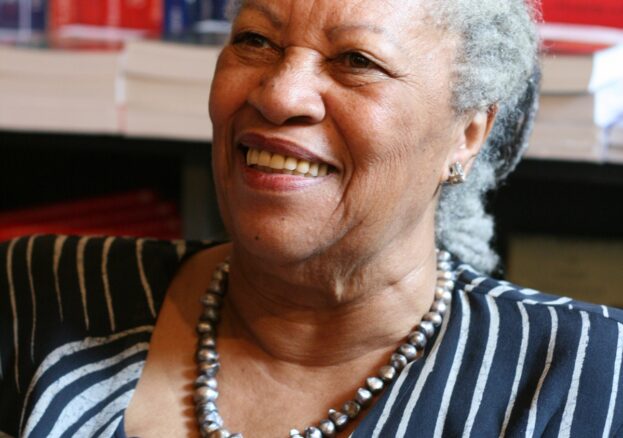
Toni Morrison is frequently described as an American writer, as though geography alone might contain the reach of her imagination. It is a convenient shorthand, but it is also misleading. Morrison did not simply write about America; she wrote about how power arranges memory, how history lingers inside language, and how silence operates as a form of control. These are not national concerns. They are civilisational ones.
To read Morrison carefully is to realise that her true subject was not a country but a condition: the human cost of forgetting.
Her novels, essays, and lectures do not ask readers to admire the past or to condemn it from a safe distance. They insist instead that history is active — alive in institutions, in assumptions, in the stories societies tell themselves about who they are. This insistence is why Morrison’s work continues to resonate far beyond the United States, particularly in nations shaped by slavery, empire, migration, and contested belonging.
Writing Against Amnesia
One of Morrison’s most enduring contributions is her refusal of cultural amnesia. In Beloved, perhaps her most widely read novel, slavery is not treated as a concluded chapter but as an unfinished psychological reality. The past returns not as an abstract lesson, but as a presence — disruptive, embodied, unavoidable.
This narrative strategy is not merely literary. It is philosophical. Morrison is arguing that history, when denied, does not disappear. It re-emerges in distorted forms: in fear, in exclusion, in inherited trauma. The novel’s power lies in its insistence that memory is not optional. It is a moral act.
For readers outside the United States, this has immediate relevance. In Britain, for example, public conversations about slavery and empire often oscillate between defensiveness and nostalgia. Morrison’s work offers neither comfort nor accusation. Instead, it demands honesty. She exposes the costs of silence — the way suppressed histories shape the present even when they are officially ignored.
This is why her writing is frequently invoked in discussions far removed from American literature departments: debates about monuments, curricula, migration, and national identity all echo with Morrison’s central insight — that the past is never truly past.
Refusing the White Gaze
Morrison famously rejected the idea that Black writers should explain themselves to white audiences. This was not a rejection of readership, but a rejection of hierarchy. She refused to place whiteness at the centre of her imaginative world, and in doing so, she altered the terms of literary authority.
This decision has had global consequences.
For writers across the Black diaspora — in Britain, the Caribbean, Africa, and Europe — Morrison’s example provided something rare and necessary: permission. Permission to write inwardly, to centre Black interior lives, to trust that specificity would lead not to obscurity but to truth.
In post-colonial societies, where cultural legitimacy has often been measured by proximity to European norms, Morrison’s refusal was quietly revolutionary. She demonstrated that universality is not achieved by dilution, but by precision. Her characters do not stand in for abstractions; they live, speak, remember, and suffer in ways that are particular and untranslatable — and therefore recognisably human.
This approach explains why her work travels so well. Readers across the world recognise themselves not because Morrison flattened difference, but because she honoured it.
Language as Power
Morrison’s sensitivity to language was not ornamental; it was ethical. She understood that words do not merely describe reality — they construct it. What is unnamed becomes unsayable. What is unsayable becomes invisible.
In her essays and speeches, she warned repeatedly against what she called “oppressive language”: not only racial slurs, but the bureaucratic, distancing vocabulary that drains human suffering of urgency. This critique has global resonance. It applies as readily to discussions of immigration, poverty, and security as it does to race.
Morrison teaches readers to listen not just to what is said, but to what is absent. Silence, in her work, is never empty. It is crowded with exclusion.
This attentiveness to language is one reason her voice retains such authority. She did not shout. She did not moralise. She trusted language to do its work — and trusted readers to meet it with seriousness. In a contemporary culture saturated with noise and opinion, that restraint feels almost radical.
Britain, Empire, and Recognition
Although Morrison wrote about America, British readers often encounter her work with a sense of uneasy recognition. The parallels are not exact, but they are instructive. Britain and the United States share intertwined histories of slavery, racial hierarchy, and selective remembrance. Both have struggled to reconcile national myths with historical realities.
Morrison’s novels unsettle the idea that time alone resolves injustice. They challenge the belief that politeness can substitute for reckoning. For a country still negotiating how — or whether — to confront its imperial past, Morrison’s clarity is bracing.
Her work aligns naturally with Black British efforts to reclaim suppressed histories: from the realities of the transatlantic slave trade to the lived experiences of the Windrush generation. Morrison does not write about Britain, but she sharpens the questions Britain must ask of itself.
Who is remembered, and who is omitted?
Which stories are elevated, and which are minimised?
What does it mean to belong to a nation that has not fully told the truth about its past?
Morrison’s insistence is simple and uncompromising: reckoning is not about guilt; it is about responsibility.
Beyond the Novel
To speak of Morrison solely as a novelist is to miss the breadth of her influence. She was also an editor, a critic, and a public intellectual who shaped American — and global — cultural life in profound ways. As an editor, she championed Black writers whose voices might otherwise have been marginalised. As an essayist, she interrogated the assumptions underpinning Western literary traditions.
In Playing in the Dark, she exposed how Blackness has shaped the American literary imagination even when Black people themselves were excluded from authorship. This intervention reshaped literary criticism worldwide. It encouraged scholars to ask not only who is present in texts, but whose absence structures meaning.
This analytical clarity has ensured Morrison’s relevance far beyond literature. Her work is cited in history, philosophy, sociology, and cultural studies. She offers a framework for understanding how power operates through narrative — a framework that remains indispensable in any serious examination of inequality.
A Global Moral Voice
Morrison’s Nobel Prize was awarded not simply for artistic excellence, but for moral vision. The Nobel committee recognised her ability to illuminate “an essential aspect of American reality.” Yet that reality — the struggle to reconcile ideals with practice, freedom with exclusion — is not uniquely American.
Morrison’s global significance lies in her capacity to articulate truths that many societies recognise but resist acknowledging. She understood that civilisation often depends on forgetting, and that literature has a duty to remember.
Her authority did not come from certainty, but from courage. She was willing to sit with complexity, to resist easy redemption, to acknowledge pain without aestheticising it. This refusal of comfort is precisely what gives her work its enduring power.
Specificity and Universality
Perhaps Morrison’s greatest paradox is this: by writing what she described as “unquestionably Black,” she produced work that is unmistakably universal. Her novels travel not because they generalise experience, but because they respect it.
She reminds readers that dignity survives even under conditions designed to destroy it, and that storytelling itself can be a form of justice. Her characters are not symbols; they are people whose lives demand recognition.
In a global moment marked by polarisation, historical distortion, and renewed struggles over whose lives matter, Morrison’s work feels less like literature and more like instruction — not in what to think, but in how to see.
Why She Still Matters
Beyond the United States, Toni Morrison matters because she teaches us how to remember responsibly, how to write without permission, and how to resist the seduction of comforting lies. She does not allow history to be neutralised or aestheticised. She insists that truth, once spoken, carries obligation.
For readers in Britain and across the world, Morrison offers something rare: a language equal to the weight of the past, and a vision of humanity that refuses simplification.
She reminds us that the past is not finished with us — and that the work of telling the truth is never complete.
Further Reading & References (optional to include)