
Black British history is made up of lives that shaped the nation in ways we are only now beginning to fully acknowledge. These books form part of that recovery. They are written by historians who map forgotten eras, novelists who illuminate emotional truths, and witnesses who carry memory forward.
Together, they offer a clear, grounded and generous introduction to the depth of Black British experience.
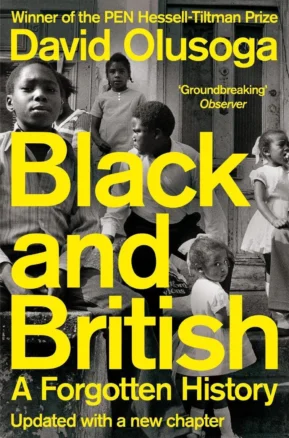 Black and British: A Forgotten History — David Olusoga
David Olusoga’s work has become central to how Britain now understands its own past. In Black and British, he presents a wide-ranging, rigorously researched narrative that traces Black presence on these islands across two millennia. He draws on archaeology, military records, personal letters, church documents and a vast historical archive to show that the story of Black Britain did not begin with Windrush — it is woven through every century.
Olusoga has a journalist’s clarity and a historian’s precision. He writes without sensationalism, building his argument through evidence and careful explanation. What emerges is a portrait of Britain that is fuller and more honest, with Black individuals placed where they belong: at the heart of the national story. For many readers, this book becomes the moment the timeline shifts — when the idea of a “white past” gives way to something richer, more complex and far closer to the truth.
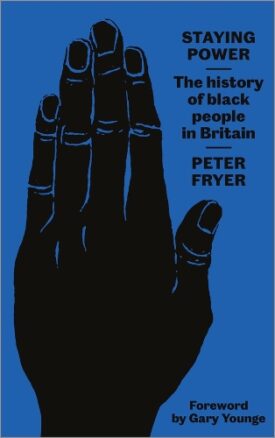 Staying Power — Peter Fryer
Published in 1984, Staying Power was ahead of its time. Peter Fryer was a journalist who refused to accept the narrow story Britain told about itself. He went into archives and uncovered court cases, newspaper references, parish records, shipping logs and testimonies that revealed a far deeper history than anyone was publicly acknowledging.
Fryer’s writing has an energy that comes from discovery. He brings forward stories of Black sailors in medieval ports, African musicians in Tudor palaces, Georgian writers resisting slavery, workers building industrial cities, and activists challenging racism long before the twentieth century. At more than 600 pages, it is sweeping in scale but always grounded in the lives of individuals.
For decades, this book was the foundation on which later scholarship — including Olusoga’s — was built. It remains essential because it gives readers the sense that Black British history is not an interruption but a constant presence. Fryer opened doors that many others have since walked through.
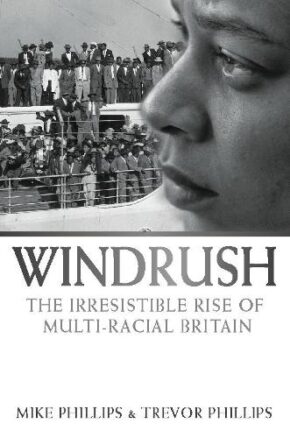 Windrush: The Irresistible Rise of Multi-Racial Britain — Trevor Phillips & Mike Phillips
Trevor and Mike Phillips bring historical skill and lived experience to this account of the Windrush generation. Rather than simply narrate events, they allow readers to enter the world of the people who stepped off the Empire Windrush in 1948 and those who followed throughout the 1950s and 1960s. Their research covers employment, housing, education, policing, unions, politics and the changing social landscape of post-war Britain.
The strength of this book lies in its attention to detail: the small acts of resilience, the private disappointments, the friendships that made new lives possible. The Phillips brothers show how communities formed — not just in London, but in Birmingham, Nottingham, Liverpool, Bristol and elsewhere — and how these communities contributed to Britain’s post-war recovery.
It is a clear-eyed but deeply appreciative portrait of a generation that remade Britain, bringing new energy, cultural forms and political engagement. This is not nostalgia; it is recognition. The book remains one of the most complete accounts of how Caribbean migration reshaped the country.
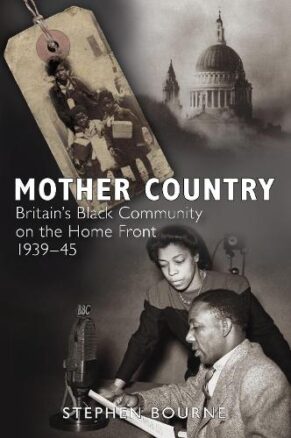 Mother Country — Stephen Bourne
Stephen Bourne has built a career on rescuing overlooked histories. Mother Country focuses on the Second World War, a period often imagined through a narrow, monochrome lens. Bourne opens that frame, showing Black Britons as nurses, pilots, air raid wardens, entertainers, volunteers, factory workers and evacuees. He highlights both individuals and communities, making the book feel intimate despite its broad sweep.
His use of photographs, letters and oral histories gives the book emotional weight. Readers encounter the everyday realities of wartime life — the fear, the work, the camaraderie — and see how Black Britons contributed to the national effort even while facing discrimination at home. Bourne’s tone is measured, respectful and always attentive to the humanity of his subjects.
For schools, families and general readers, this book provides a much-needed correction: the Home Front was multiracial, and its story cannot be told accurately without acknowledging that fact.
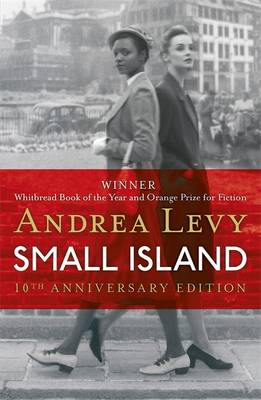 Small Island — Andrea Levy
Small Island is widely considered one of the most important novels about the Windrush generation. Andrea Levy had the rare ability to blend historical insight with compelling storytelling. The novel follows two Jamaican migrants and the white British couple who take them in, weaving their perspectives into a narrative that is warm, sharp, funny and unflinching.
Through her characters, Levy captures the emotional truth of the period: the excitement of arrival, the disappointment of prejudice, the negotiations of identity and belonging. The novel moves seamlessly between the Caribbean and Britain, allowing readers to understand what migration meant for both those who left and those who were already here.
Levy’s work continues to be taught widely because it humanises a major historical moment. It is fiction, but it opens a door to understanding that is difficult for conventional history books to match.
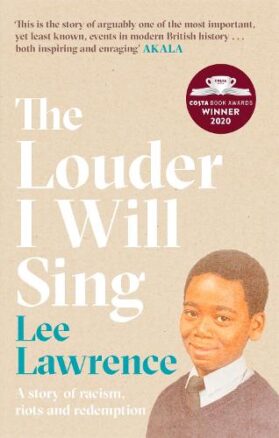 The Louder I Will Sing — Lee Lawrence
Lee Lawrence offers a deeply personal perspective on a critical moment in modern British history. After his mother, Cherry Groce, was shot by police in 1985, the Brixton community erupted in protest. Lawrence’s memoir follows the years after that day — the impact on his family, the long fight for recognition, and his own path from anger to advocacy.
His writing is calm, thoughtful and grounded. He does not dramatise or embellish; instead, he explains how trauma shapes childhood, how communities respond to injustice, and how campaigns for accountability evolve over decades. The book is as much about growth as it is about grievance.
For readers wanting to understand modern policing, community resilience or the long-term effects of state failure, this memoir offers clarity and depth. It is also a story of determination — and of the strength that emerges within families during the hardest moments.
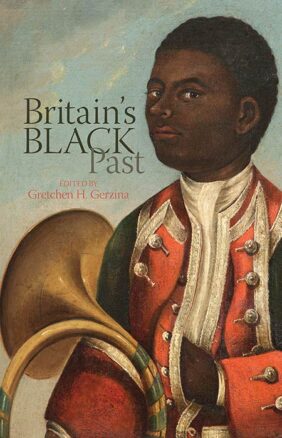 Britain’s Black Past — edited by Gretchen Gerzina
Under Gretchen Gerzina’s editorship, this collection brings together leading historians whose work collectively rewrites the early chapters of Black British history. Each essay explores a different period or figure, from court musicians in the Tudor era to writers and activists in the eighteenth and nineteenth centuries.
What makes the book particularly valuable is its accessibility. The essays are readable and concise, offering snapshots of lives that challenge assumptions about Britain’s past. For teachers and students, it provides a versatile resource; for general readers, it offers a series of surprises that expand the historical imagination.
Gerzina’s commitment to uncovering the long presence of Black people in Britain gives the collection a unifying purpose. It changes the reader’s sense of chronology, demonstrating that Black British history is not recent — it is deeply rooted.
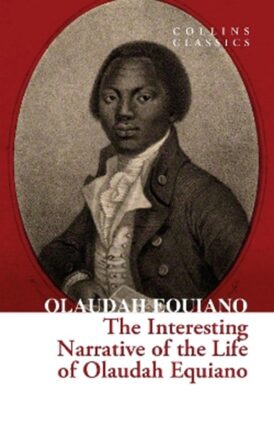 The Interesting Narrative — Olaudah Equiano
Equiano’s autobiography remains one of the most important books ever written about the British Empire. His life — from capture and enslavement to freedom and activism — is extraordinary in its scope. The narrative takes readers across continents and into the heart of the transatlantic slave trade, but its tone is composed, articulate and controlled.
The book was a major force in the abolition campaign. Equiano’s ability to present his experiences with clarity and moral force changed minds across Britain. His writing has a measured confidence that makes the narrative not only historically significant but also deeply engaging.
For modern readers, the power of the book lies in its perspective: it is a firsthand account delivered with dignity and purpose, offering insight into both the brutality of the era and the intelligence and resilience of those who resisted it.
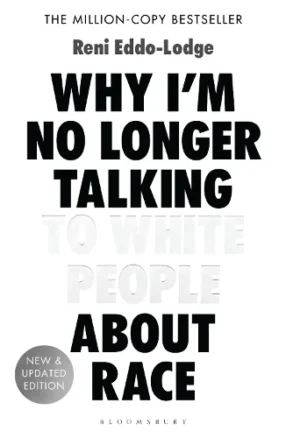 Why I’m No Longer Talking to White People About Race — Reni Eddo-Lodge
Reni Eddo-Lodge examines race and racism in Britain with precision and accessibility. She explores subjects that often generate confusion — structural inequality, privilege, feminism, class — and presents them in clear, practical language that invites reflection rather than defensiveness.
Her chapter on Britain’s hidden histories is especially valuable, tracing the ways in which Black British history has been omitted from mainstream narratives. Through interviews, data, and personal insight, she connects past injustices to present realities.
The book became a national bestseller because it provided a framework for conversations many people were struggling to navigate. Its strength lies in its clarity, and in Eddo-Lodge’s ability to distil complex issues without diluting their significance.
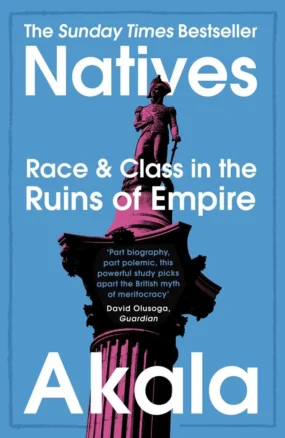 Natives — Akala
Akala’s work sits at the intersection of history, sociology and memoir. In Natives, he uses episodes from his own upbringing to open discussions about empire, education, class and identity. His analysis is sharp and well-researched, but his writing remains grounded in lived experience.
Akala’s skill lies in connecting the dots: between the curriculum and colonial legacies, between policing and systemic bias, between media narratives and public perception. The book feels both personal and expansive, moving easily from policy to street-level reality.
For younger readers in particular, Natives offers a modern entry point into understanding how history shapes the world they navigate today. It remains one of the most widely recommended contemporary works on race in Britain.
Taken together, these books offer a strong foundation for anyone seeking to understand Black British history — its depth, its continuity and its ongoing influence. Each author brings a different lens, whether through careful scholarship, lived experience or imaginative storytelling. What unites them is the desire to expand Britain’s understanding of itself