
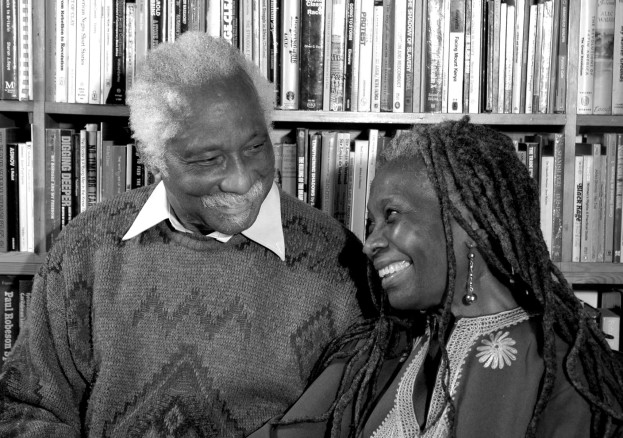
From their West London community, Eric worked alongside his wife, Jessica Huntley, to co-found Bogle-L’Ouverture Publications, one of the most important Black publishing houses in Britain. At a time when Black writers, historians, educators and campaigners were too often excluded from mainstream publishing, the Huntleys created a platform of their own — ensuring that vital voices and histories could be read, shared and preserved.
Bogle-L’Ouverture was never simply a publishing house. It was a statement of independence and belief: that Black history mattered, Black literature mattered, and Black communities deserved to see themselves represented with truth, dignity and depth. Through their work, the Huntleys helped open doors for writers and thinkers whose influence would later shape education, activism and public debate across Britain and beyond.
Their work also extended beyond publishing. Through the Walter Rodney Bookshop, the Huntleys established a respected community space that became known for education, discussion and support. For many, it was not only a place to buy books, but a place to learn, connect, and access knowledge that reflected Black experiences and global struggles for justice and equality. It became part of a wider tradition of Black British institutions built through hard work, shared purpose, and community strength.
Eric’s life began in British Guiana (now Guyana), where he became politically active from an early age. He later spoke about being incarcerated in 1955, a reminder of the everyday realities of colonial control and the risks faced by those who challenged injustice. He came to the United Kingdom in 1956, where he and Jessica continued their lifelong commitment to campaigning, education and community action.
Eric was widely respected for his humility, calm authority and quiet determination. He never sought recognition, and consistently directed praise away from himself, insisting that Jessica deserved the credit. Those who met him remember a man who spoke thoughtfully, listened carefully, and remained guided by principle throughout his life. He carried himself with the quiet confidence of someone who understood that real work is not always visible, but it is always felt.
As Eric once warned, “Never underestimate the power of the media.” He understood that publishing was not simply about books — it was about protecting history, shaping understanding, and ensuring that future generations would not have to search in silence for the stories that belong to them. His work helped preserve the record of Black life in Britain at a time when it was too often ignored, misrepresented, or pushed aside.
Eric Huntley’s legacy is lasting. His contribution to Black British publishing, education and community life remains part of the foundation on which so much has been built since. He will be greatly missed, and warmly remembered with deep respect and gratitude.
We mourn the death of Eric Huntley, but we give thanks for his life. In faith, we trust he is now at peace, reunited with Jessica, and held in eternal love. His legacy lives on in the lives he touched and the history he helped preserve.