
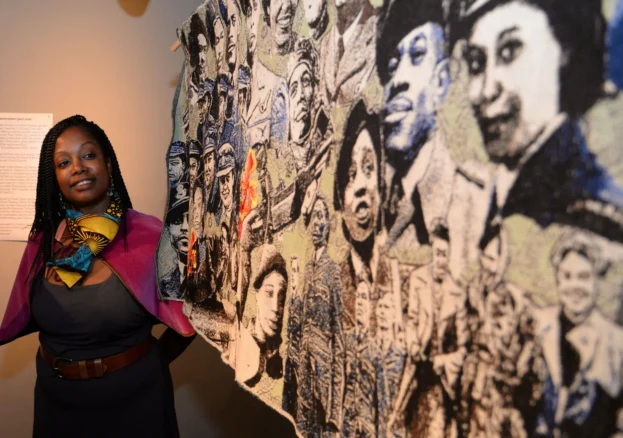
Tapestry of Black Britons, founded by artist and cultural producer Paula Ogun Hector, is a large-scale, collaborative artwork that brings together stories of African and Caribbean presence in Britain across centuries. Spanning from Roman Britain to the present day, the project seeks to present a more complete and connected understanding of the nation’s history—one that recognises these contributions as integral rather than peripheral.
The 2026 tour will include a number of key cultural institutions. The exhibition will open at Stirling Smith Art Gallery and Museum in Scotland from 1 October to December 2026, followed by Hastings Museum from 10 October to 9 November 2026, and Manchester Central Library from 11 November 2026 through to January 2027. Further bookings are already secured through to 2028, reflecting growing national recognition and demand.
Developed as both an artwork and an educational resource, Tapestry of Black Britons combines traditional textile craftsmanship with contemporary digital design. Each panel is informed by historical research and shaped through collaboration with artists, schools, and community groups across the country. Workshops play a central role in the process, inviting participants to contribute creatively—ensuring that the work reflects both historical narratives and present-day voices.
At the centre of the project is a clear commitment to inclusion. By foregrounding stories that have often been overlooked in mainstream accounts, the tapestry repositions them within the broader context of British history. Ogun Hector has described the work as a “living artwork”—one that continues to evolve as more individuals and communities engage with it.
A significant new addition to the project, the British Carnivals tapestry, is currently in development and will be unveiled at Bath Abbey on Windrush Day (June 2026). Celebrating the cultural traditions of carnival and the enduring legacy of the Windrush generation, the piece will incorporate contributions from local communities, forming part of a wider programme of events and public engagement.
The project builds on a strong foundation established in 2025, when its inaugural exhibition launched at Bristol’s Arnolfini. Since then, it has toured a number of venues with support from Arts Council England and heritage organisations, continuing to grow in scale, ambition, and public participation.
Alongside its exhibitions, Tapestry of Black Britons maintains a strong educational focus. The initiative has already engaged hundreds of young people through workshops in art, history, and creative writing, encouraging new ways of exploring identity, heritage, and historical understanding. Its continued expansion offers further opportunities for schools, universities, and communities to connect with these themes in meaningful and accessible ways.
As conversations continue around how Britain’s past is represented and understood, Tapestry of Black Britons offers a thoughtful and timely contribution—bringing together art, education, and community collaboration to present a fuller and more inclusive national story