
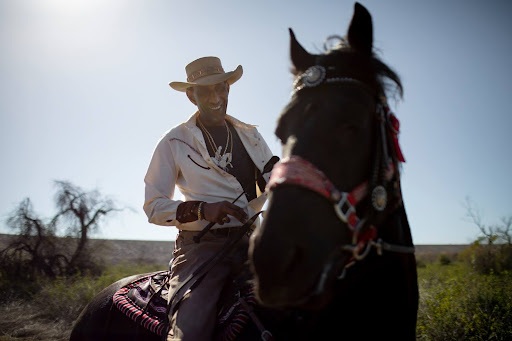
Somebody decided the cowboy was white. Not historians, and not the census takers who tracked labor on Texas ranches. The decision came out of Hollywood editing rooms and publishing offices, and by the time anyone checked the receipts, three or four generations had absorbed a fiction as settled truth.
Where the Word Came From
White cattle workers had a different title. They were “cowhands.” The word “cowboy” got pinned specifically on Black men doing the same job, borrowing the old plantation habit of calling any Black male “boy” regardless of his actual age. That a slur eventually became the single most romanticized job title in the Western hemisphere is its own kind of strange.
Thousands of formerly enslaved men moved into ranching after 1865 because the pay was decent and the work didn’t require you to answer to a foreman hovering six feet away. Plenty already knew cattle. Texas plantations had used enslaved labor to manage herds since the 1700s, and Mexican vaqueros had passed on horsemanship techniques that predated anything English-speaking settlers brought west.
Historian Kenneth Porter placed the total number of cowboys during the peak trail-drive decades at around 35,000. Between 6,000 and 9,000 of those riders were Black.
On the trail itself, the math of survival sometimes outweighed the math of race. Nobody stopped to check lineage in the middle of a stampede at two in the morning.
Two Names That Should Have Been Famous
Nat Love arrived in Dodge City in 1869 at fifteen, carrying fifty dollars he’d won selling a horse twice to the same buyer back in Tennessee. He talked his way into a trail crew by breaking a horse called Good Eye that nobody else would ride. Twenty years of cattle work followed.
His 1907 autobiography, the only full memoir ever published by a Black cowhand, reads like a dime novel he wrote about himself on purpose. Love claimed a July 4, 1876 rodeo victory in Deadwood earned him the nickname “Deadwood Dick” and a $200 prize. No press coverage of that contest has ever turned up. Scholars like William Loren Katz thought Love came across more as a pulp fiction character than a working ranch hand. The book became a primary historical document anyway, because nobody else from that workforce wrote one.
Bill Pickett took a weirder route to fame. Born in Texas in 1870, he spent his childhood watching ranch dogs control cattle by clamping onto their upper lips and forcing them sideways to the ground. He tried it himself. It worked. The technique became “bulldogging,” eventually formalized as steer wrestling in professional rodeo.
Pickett toured internationally with the 101 Ranch Wild West Show for over two decades, sharing billing with Will Rogers. At a 1908 bullring appearance, he rode a fighting bull for more than five minutes and nearly caused a riot. For much of his career, rodeo organizers barred Black competitors outright, so Pickett registered as Cherokee to get past the gate.
| Figure | Era | Contribution |
| Nat Love | 1869–1890 | Only Black cowhand to publish a full autobiography; folk hero “Deadwood Dick” |
| Bill Pickett | 1888–1932 | Created steer wrestling; joined the National Rodeo Hall of Fame posthumously, 1972 |
| Bose Ikard | Post-Civil War | Scouted the Goodnight-Loving Trail; rancher Charles Goodnight wrote his epitaph |
| Bass Reeves | 1875–1907 | Served over three decades as a deputy U.S. marshal across Indian Territory |
The Edit That Took a Century to Notice
Zane Grey’s novels didn’t feature Black cowboys. Neither did the five-nights-a-week television Westerns of the 1950s. The absence was so consistent it functioned as its own argument. If you never saw a Black rider on screen, you assumed there hadn’t been one on the trail.
Reclamation has moved in fits. The Bill Pickett Invitational Rodeo has been running since 1984 and pulled in over five million spectators. Urban horse clubs from Oakland to Brooklyn keep trail traditions visible on asphalt. In 2024, the album Cowboy Carter won a Grammy for Best Country Album after its creator researched the frontier and found a proportion of Black cowboys even higher than most academic estimates.
By 1890, only 473 Black cowboys still worked in Texas, down from thousands a decade earlier. Railroads made the long drives obsolete for everybody. The difference is that when the mythology got rebuilt for entertainment, one group of riders was invited back into the story and the other wasn’t.
You can see the knockoff version of the frontier everywhere now, from movie marathons to every casino online platform running a Wild West theme with a blond gunslinger on the loading screen. The original version looked nothing like that. Historians across multiple institutions agree that between 20 and 25 percent of working cowboys after the Civil War were Black men.