
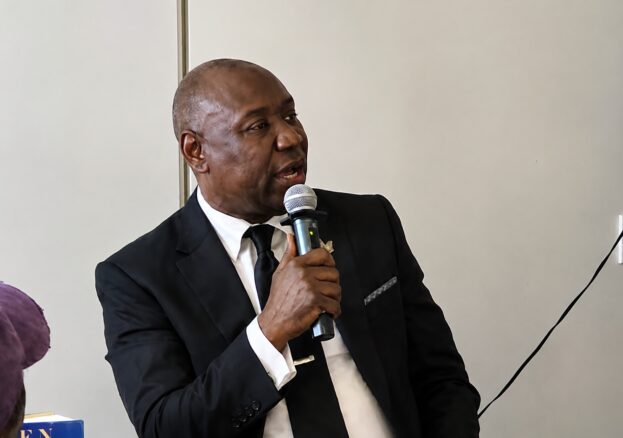
The atmosphere inside the Black Cultural Archives in Brixton was one of anticipation. On 25 June 2026, campaigners, lawyers, activists and community leaders gathered to hear one of the world’s most recognisable civil rights attorneys, Ben Crump, discuss his remarkable career and the launch of his debut fiction novel, Worse Than a Lie: A Beau Lee Cooper Novel.
What unfolded was far more than a book launch. It became an emotional and deeply personal conversation about justice, resilience and the responsibility to continue fighting, even when the odds appear insurmountable.
For more than two decades, Crump has represented families whose names have become synonymous with the struggle for racial justice. Yet rather than dwelling on his extraordinary legal victories, he spoke candidly about the emotional burden of carrying so many stories of grief and injustice.
Responding to a question about how he copes with the psychological toll of his work, Crump reflected on the recent death of one-year-old Cohen Wiley, who was fatally shot by police after officers pursued a vehicle over the alleged theft of a box of nappies.
“I will use all my resources, all my influence to say that that little Black baby named Cohen Wiley’s life mattered, and we won’t let them turn the page,” he said. “We will make them release this video so people can see the truth of what happened.”
For Crump, writing fiction became more than a creative exercise; it became therapy.
“We live in a world where we see so many unbelievable injustices inflicted, especially on Black and Brown people,” he told the audience, describing how victims are too often put on trial after they have lost their lives. Whether speaking about George Floyd, Breonna Taylor or countless lesser-known cases, his frustration was clear: society repeatedly searches for reasons to diminish the humanity of those who have already suffered the ultimate injustice.
Yet despite the weight of these experiences, Crump’s message was one of hope.
“Justice is possible,” he declared. “We keep fighting and we don’t give up the fight.”
One of the evening’s most memorable moments came as Crump shared a story about the late Reverend Jesse Jackson during an equal pay discrimination case in Chicago. Facing what appeared to be an unsympathetic judge, Crump admitted that even he had begun to feel defeated.
During a court recess, Jackson quietly pulled him aside.
“You don’t drown because the water is deep. You drown because you stop kicking.”
The audience fell silent as Crump repeated the words that have stayed with him ever since.
“Whatever you do, you can never stop kicking… I don’t care how stacked the cards are against you, you just keep kicking. I don’t care what the odds are. You just keep kicking. As long as you keep kicking, you will make it to the other shore.”
The courtroom battle eventually ended in victory, with the judge allowing the case to proceed before it was later settled. But for Crump, the lesson transcended the legal system.
“As long as we keep kicking,” he said, “we will overcome.”
That philosophy also inspired his decision to write Worse Than a Lie. While legal thrillers have long entertained millions of readers, Crump noticed something was missing.
“Never in those great books had I seen a Black hero trial lawyer,” he explained. Influenced by pioneers such as Thurgood Marshall and inspired by authors including John Grisham, Crump wanted to create a protagonist who reflected communities rarely centred in legal fiction.
His fictional lawyer, Beau Lee Cooper, is designed to do more than solve courtroom mysteries. Crump hopes the character will inspire young people to imagine themselves as advocates for justice.
“Little Black children and little minority children can look at him and say, ‘When I grow up, I’m going to be like that Black hero lawyer.’”
For Crump, representation remains transformative because, as he reminded the audience, “children will be what they can see.”
Throughout the evening, Crump spoke with warmth, humour and humility, despite the enormity of the issues discussed. His admiration for civil rights giants including Thurgood Marshall, Reverend Jesse Jackson and Reverend Al Sharpton was evident, but so too was his determination to inspire a new generation of lawyers, campaigners and community leaders.
The event concluded with audience questions, heartfelt tributes and enthusiastic applause before attendees queued to have their books signed by the New York Times bestselling author.
Those leaving the Black Cultural Archives carried away more than a signed copy of Worse Than a Lie. They left with a simple but profound message that resonated far beyond the walls of the venue.
When faced with injustice, discrimination or seemingly impossible odds, don’t stop.
Keep kicking.