
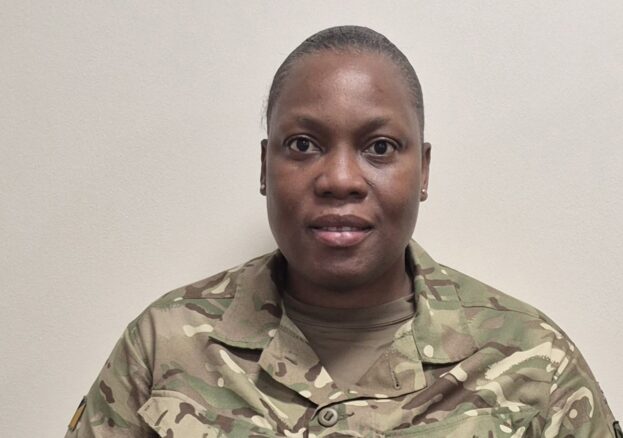
Preparing meals is only part of Staff Sergeant Julie Robinson’s work. As Unit Catering Manager at 27 Regiment, Royal Logistic Corps, she leads a team of 10 chefs, delivering a service that supports soldiers’ wellbeing and morale while helping her team develop their skills.
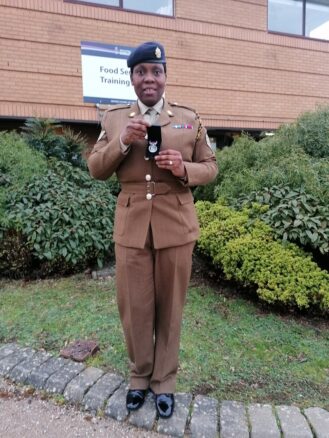 Her career has taken her from catering roles with the Guards to training the next generation of Army chefs at Worthy Down. During Exercise WARFIGHTER, she led 40 chefs through demanding conditions, an experience that strengthened her approach to leadership and looking after others.
That commitment to people extends beyond the kitchen. Through regimental mentoring, the Army Multicultural Network and catering support for a charity helping vulnerable young people, Julie puts service into practice in several ways. We spoke to her about the challenges, achievements and people behind her Army career.
What inspired you to join the British Army, and why did you choose to become a chef in the Royal Logistic Corps?
I was inspired to join the British Army because I wanted a career that offered challenge, structure, and opportunities for personal and professional development. The Army’s values of courage, discipline, respect, integrity, loyalty, and selfless commitment appealed to me, and I wanted to be part of an organisation that makes a meaningful contribution both at home and overseas.
I chose to become a chef in the Royal Logistic Corps because food service plays a vital role in maintaining the morale, wellbeing, and operational effectiveness of personnel. The role also offers excellent opportunities to develop culinary skills, leadership qualities, and the ability to work as part of a close knit team. Being an RLC chef allows me to combine my passion for cooking with military service, making it a rewarding and fulfilling career.
Can you tell us about your military career so far, including the roles and regiments in which you have served?
I have currently served 19 years in the British Army and have had the opportunity to undertake a variety of rewarding appointments throughout my career. I served with 27 Regiment RLC as a Chef Class 2, before progressing to the Coldstream Guards as a Chef Class 1 and Production Supervisor. I subsequently served with the Welsh Guards and Scots Guards as a Production Supervisor, where I was responsible for overseeing catering operations and maintaining high standards of food service delivery.
I was also appointed as an Instructor at the Catering Training Wing, Worthy Down, delivering the Defence Basic Chef and Chef Class 1 courses, where I played a key role in developing the next generation of military chefs. And the current Unit Catering Manager for 27 Regt.
What does your current role with 27 Regiment RLC involve, and what are your main responsibilities as a Staff Sergeant?
My current role at 27 Regiment RLC as the Unit Catering Manager, I am responsible for an team of 10 chefs and managed all catering operations, ensuring compliance with policy, and delivering an effective catering service in support of personnel develop and career goals.
How does working as an Army chef differ from working as a chef in civilian life.
Working as an Army chef differs significantly from civilian catering because the role extends far beyond preparing and serving meals. As an Army chef, you are first and foremost a soldier, which means you must be prepared to deploy, operate in challenging environments, and support military operations worldwide.
Unlike many civilian chefs who work in fixed kitchens and familiar settings, Army chefs must be adaptable and capable of delivering high-quality catering in a variety of locations, from modern dining facilities to field kitchens during exercises and deployments. This often involves catering for large numbers of personnel while working with limited resources and under demanding conditions.
Army chefs also play a vital role in maintaining morale and operational effectiveness. Providing nutritious, balanced meals directly supports the physical and mental wellbeing of soldiers, enabling them to perform at their best. In addition to culinary skills, Army chefs develop leadership, management, instructional, and logistical skills throughout their careers.
Having served in a range of appointments, including Production Supervisor, Instructor at Catering Training Wing Worthy Down, and currently as a Unit Catering Manager, I have found that the Army offers opportunities for personal development and career progression that are unique. The role combines professional catering expertise with leadership, teamwork, and the chance to support operations both in the UK and overseas, making it a highly rewarding career.
Which operational deployments or overseas assignments have had the greatest impact on you, and what did you learn from them?
Exercise WARFIGHTER has had the greatest impact on both my professional career and personal development. As the first female Staff Sergeant to lead the exercise, it was a rewarding and memorable experience to command and manage a team of 40 chefs in a demanding operational environment.
This opportunity significantly enhanced my leadership and management skills, requiring me to coordinate resources, motivate personnel, and ensure the successful delivery of catering support throughout the exercise. Over the three months leading the team, I learned to view every challenge as an opportunity to adapt, innovate, and overcome obstacles.
The experience reinforced the importance of resilience, teamwork, and effective communication. It taught me that setbacks are not failures; true failure only occurs when you stop trying. The lessons I gained from Exercise WARFIGHTER continue to influence my approach to leadership and have contributed greatly to my development as a senior non-commissioned officer.
Army chefs often work in demanding environments. Can you describe a time when you had to provide for personnel under particularly challenging conditions?
During Exercise WARFIGHTER, the temperatures at each location were extremely high, creating a challenging working environment for the catering team. Delivering three meals a day under such conditions placed considerable physical and mental demands on the department.
As the lead, I was responsible for supporting and managing the chefs, ensuring their welfare remained a priority while maintaining the required catering output. This included monitoring working hours, encouraging regular hydration, and promoting effective rest periods to minimise the risk of heat-related illnesses and fatigue.
Despite the demanding conditions, the team demonstrated exceptional professionalism, resilience, and teamwork. By prioritising the wellbeing of personnel and maintaining clear communication, we were able to sustain high standards of catering support throughout the exercise and successfully meet the needs of all personnel.
This experience further developed my leadership skills and reinforced the importance of balancing operational requirements with the welfare and safety of personnel.
What military training, education or professional qualifications have you completed during your career?
During my Army career, I have had the opportunity to gain a range of professional and academic qualifications these include Level 3 and Level 4 Nutrition, Level 2 and Level 3 Food Safety in Catering, and Level 4 Managing Food Safety. In addition, I have achieved a Level 5 qualification in Coaching and Mentoring and hold a Bachelor of Science (BSc Hons) in Business Management
As a senior non-commissioned officer, how do you support, mentor and develop the soldiers serving with you?
I am currently committed to supporting the development of soldiers within 27 Regiment RLC by designing, implementing, and leading a Regimental mentoring programme. The programme provides personnel with the opportunity to enrol and receive tailored guidance and support to help them achieve their professional and personal development goals.
In addition to leading the mentoring programme, I am the Coordinator and Mentor for the Army Multicultural Network. In this role, I support personnel from diverse backgrounds, promote inclusion, and provide mentoring opportunities that encourage career progression.
These responsibilities enable me to contribute to the development of future leaders while fostering a positive and inclusive environment that supports the success of all personnel.
Have you been involved in any charitable, voluntary or community work inside or outside the Army?.
Over the past two years, I have worked alongside the team of chefs from 27 Regiment Catering Department organising catering support for the Step by Step Charity Annual BBQ in Aldershot. This event helps raise vital funds to support homeless and vulnerable young people within the local Aldershot community. Through this initiative, I have contributed my professional catering expertise to support a worthwhile cause and strengthen the unit engagement with the local community.
What achievement from your military career makes you most proud?
Receiving 101 OSB Brigade Commander’s Commendation and Chief of Defence Staff coin for outstanding performance catering for VVIP guest for Armed Forces Day.
What challenges have you faced during your career, and what helped you overcome them?
One of the greatest challenges I faced during my career was completing my BSc (Hons) in Business Management while balancing operational commitments. During my first year of study, I deployed to Germany for three months, followed by a further three months deployment to the USA in my second year. The demands of deployment, combined with the time difference, made it particularly difficult to manage both my professional responsibilities and academic studies.
Despite these challenges, the unwavering support of my husband and daughter motivated me to remain focused and determined to succeed. During deployment, I used every available spare moment to catch up on missed lectures, review course materials, and complete assigned coursework to ensure I remained on track with my studies.
Through effective time management, self-discipline, and resilience, I successfully balanced my work commitments with my academic responsibilities. Overcoming these challenges strengthened my determination and ultimately enabled me to complete my degree while continuing to meet the demands of military service.
What would you say to a young person particularly someone who may not see people like themselves represented in the Armed Forces—who is considering an Army career?
As someone who has served for many years, I would highlight that the Army provides opportunities for people from all backgrounds to develop professionally and personally. It offers world class training, education, travel, leadership development, and the chance to be part of a team where everyone works towards a common goal.
Also, my advice would be to believe in your abilities, seek out mentors, ask questions, and take every opportunity available to you. The Army can provide a rewarding and fulfilling career, and your unique experiences, perspective, and talents are valuable assets that can make a real difference
Furthermore, there may be times when you feel challenged or out of your comfort zone, but those experiences often help you grow the most. Don’t focus on whether people like you are already represented. Instead, focus on what you can bring to the organisation and the example you can set for others who may follow in your footsteps.