
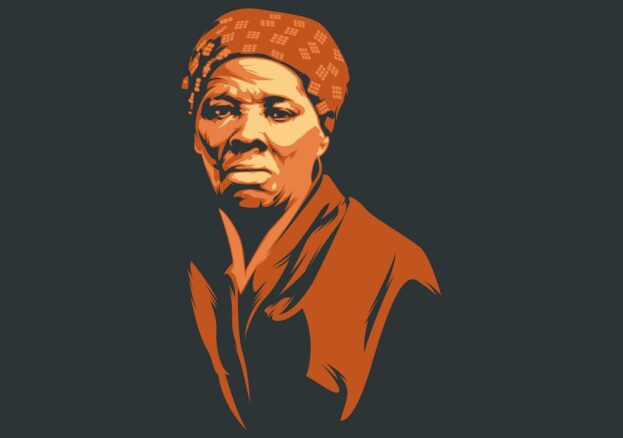
Harriet Tubman’s life remains one of the most extraordinary stories in American history. Born into slavery, she rose to become a freedom fighter, abolitionist, military leader, and champion of women’s rights. Her courage, determination, and refusal to accept injustice made her a symbol of resistance and hope, not only in her own lifetime but for generations that followed.
Today, Harriet Tubman is recognised around the world as a hero of freedom and human dignity. In 2020, the United States Treasury announced plans to place Tubman on the $20 bill, replacing President Andrew Jackson — a powerful acknowledgement of her enduring place in American history.
Harriet Tubman was born Araminta Ross in 1822 in Dorchester County, Maryland, to parents who were enslaved. From a young age, she experienced the brutality of slavery, enduring hard labour, physical violence, and constant fear. She was frequently whipped and beaten, and as a child suffered a severe head injury after an overseer struck her with a heavy object. The injury caused lifelong pain and health problems, yet Tubman never allowed these hardships to break her spirit.
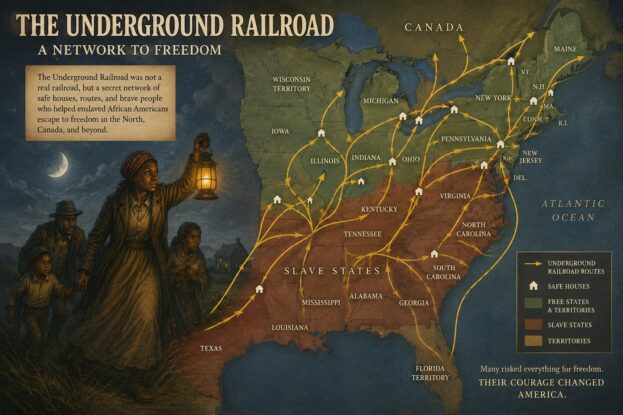
In 1849, determined to claim her freedom, Tubman escaped slavery with the help of the Underground Railroad — a secret network of abolitionists, safe houses, and routes that assisted enslaved African Americans in fleeing to free states and Canada.
Her escape marked the beginning of a lifelong mission to help others gain their freedom.
After reaching freedom, Tubman could have chosen safety and anonymity. Instead, she repeatedly risked her life by returning to the South to rescue others. Working as a “conductor” on the Underground Railroad, she led approximately 13 rescue missions and helped around 70 enslaved people escape slavery, including members of her own family.
Travelling mostly at night and relying on secret routes, coded songs, and trusted allies, Tubman guided men, women, and children to freedom while evading slave catchers and armed patrols. Her bravery earned her the nickname “Moses,” after the biblical figure who led his people out of bondage.
At a time when capture could have meant imprisonment, torture, or death, Tubman remained fearless in her determination to free others.
During the American Civil War, Harriet Tubman continued her fight against slavery by supporting the Union Army. She worked as a nurse, cook, scout, and spy, using her knowledge of the South to gather intelligence for Union forces.
In 1863, Tubman helped lead the Combahee River Raid in South Carolina, an armed military operation that liberated more than 700 enslaved people. This made her the first woman in American history to lead a military expedition during wartime.
Her contributions to the Union war effort demonstrated not only extraordinary courage but also strategic intelligence and leadership. Tubman proved that Black women played a vital role in shaping the outcome of the Civil War and the eventual destruction of slavery in the United States.
After the war, Tubman settled in Auburn, New York, where she remained active in the fight for equality. She became involved in the women’s suffrage movement, speaking alongside leading activists such as Susan B. Anthony and Elizabeth Cady Stanton.
Tubman believed that freedom and equality should belong to everyone, regardless of race or gender. She used her own experiences to campaign for voting rights, civil rights, and social justice, becoming an important voice in both the abolitionist and women’s rights movements.
Her activism reflected a lifelong commitment to justice and human dignity.
Tubman’s compassion extended beyond politics and activism. In Auburn, she established the Harriet Tubman Home for the Aged, providing shelter and care for elderly African Americans who were poor, disabled, or had nowhere else to go.
The home reflected Tubman’s belief in community, care, and service to others. She spent her final years there before passing away in 1913 at the age of approximately 91.
Even in later life, she remained devoted to helping vulnerable people with dignity and compassion.
Quotes from Harriet Tubman
“I never ran my train off the track, and I never lost a passenger.”
“Every great dream begins with a dreamer. Always remember, you have within you the strength, the patience, and the passion to reach for the stars to change the world.”
“I freed a thousand slaves. I could have freed a thousand more if only they knew they were slaves.”
“I never ran away from slavery — I simply walked away.”
“I prayed to God to make me strong and able to fight, and that’s what I’ve always prayed for ever since.”
Harriet Tubman’s Lasting Legacy
Abolition and Freedom
Harriet Tubman became one of the most important figures in the abolitionist movement. By risking her own freedom to rescue others, she exposed the cruelty of slavery and inspired many Americans to join the fight against it.
Her actions transformed the Underground Railroad into one of the most powerful symbols of resistance in American history.
Leadership on the Underground Railroad
Tubman’s courage and leadership helped countless enslaved people reach safety. Her work demonstrated extraordinary resilience, intelligence, and selflessness, making her one of the most respected conductors on the Underground Railroad.
Her example inspired others to oppose slavery and support the abolitionist cause.
Service During the Civil War
Tubman’s role during the Civil War challenged traditional ideas about race and gender. As a scout, nurse, and military leader, she showed that Black women could serve as strategists and leaders in moments of national crisis.
Her contributions helped strengthen the Union cause and advance the fight for emancipation.
Women’s Rights and Equality
Tubman’s advocacy for women’s suffrage linked the struggles for racial justice and gender equality. She believed deeply in equal rights and used her public voice to encourage social change long after slavery had ended.
Her work helped lay the foundations for future civil rights and feminist movements.
A Symbol of Courage and Determination
More than a century after her death, Harriet Tubman remains a global symbol of bravery, resilience, and moral courage. Her life continues to inspire people to challenge injustice, defend human rights, and stand firm in the face of adversity.
From slavery to freedom, from the Underground Railroad to the women’s suffrage movement, Harriet Tubman’s story is one of extraordinary strength and unwavering commitment to justice. Her legacy endures not only in history books and memorials, but in every movement that continues the struggle for equality and freedom.
Further Reading
- Clinton, Catherine. Harriet Tubman: The Road to Freedom. Little, Brown and Company, 2004.
- Larson, Kate Clifford. Bound for the Promised Land: Harriet Tubman, Portrait of an American Hero. Ballantine Books, 2004.
- Bradford, Sarah H. Scenes in the Life of Harriet Tubman. Originally published 1869.
- Humez, Jean M. Harriet Tubman: The Life and the Life Stories. University of Wisconsin Press, 2003.
- Painter, Nell Irvin. Sojourner Truth: A Life, A Symbol. W. W. Norton & Company, 1997.
- National Museum of African American History and Culture — Harriet Tubman Collection.
- Library of Congress: African American History Resources.
- PBS Documentary: Harriet Tubman: Visions of Freedom.
- Yellin, Jean Fagan. Women and Sisters: The Antislavery Feminists in American Culture.
- McFeely, William S. Frederick Douglass. W. W. Norton & Company, 1991.