
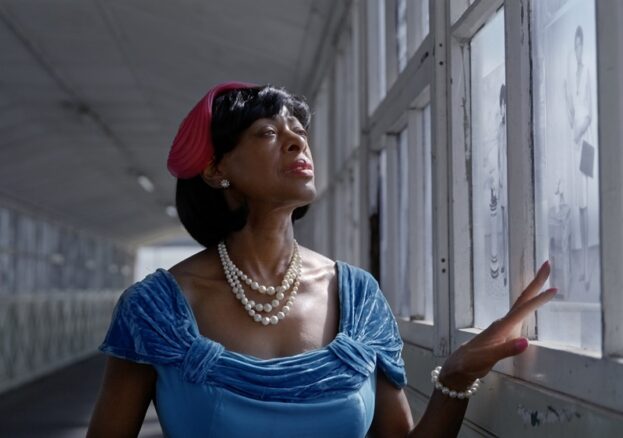
For many families shaped by the Windrush generation, migration was never only a story of arrival. It was also a story of separation, silence, sacrifice and the quiet work of rebuilding family life across continents. In her deeply personal film Here I Stand, writer, poet and filmmaker Ionie Richards explores the emotional inheritance of Windrush through the lens of her own family history — tracing the journeys of her parents, the children left behind in Jamaica, the siblings born in Britain, and the memories that were often too painful to speak aloud.
Blending personal testimony, historical reflection and poetic storytelling, Richards’ work moves beyond familiar narratives of hardship to reveal something more intimate: the tenderness, grief, resilience and dignity carried by Caribbean families who made Britain home. In this interview, she reflects on the making of Here I Stand, the silences passed between generations, and why preserving Black British stories is vital before they disappear.
A lot of Windrush stories focus on arrival and struggle, but not always on emotion. What emotional truth were you trying to capture in Here I Stand?
The film Here I Stand was a personal quest. I wanted to show the human side of migration, from my perspective. It considers my young siblings left behind in Jamaica who had to build a relationship with my parents who they hardly remembered when reunited, the bonds created with new siblings born in England, to the disconnect of my grandmother who for some, had a dual role as a “temporary replacement mother.” For those of us born in England my granny was often just a name on an airmail letter with stories from “home.” Emotionally the film explores the idea that migration isn’t just a physical journey across the Atlantic; it is also a psychological fracturing. Yet, the ultimate emotional truth here isn’t just the fracture—it’s the resilience of my family that actively chose to bring itself back together despite hardships, and struggle in a society that wasn’t always ready to welcome us.
Caribbean parents often protected their children by not speaking about certain experiences. Were there things you only came to understand later in life?
One of the biggest sadness for me was the death of my older brother Calvin at the age of 14 while on a school trip abroad. I was a toddler when it happened but I only realised later in life the trauma my parents and my older siblings must had gone through at the time. My parents had put their trust in authority but it failed them. Calvin’s story was silenced, maybe as a coping mechanism, until the film provided an opportunity to discuss him and the trauma experienced by others who grew up with him.
Did making this film bring up grief, healing, pride — or all three at once?
The film created conversations within my family between those born in Jamaica and those of us born in the UK. It stirred memories of loss and healing by understanding more openly what we all went through. There was also pride in what I and my siblings have achieved, because of my parents sacrifices, that we can pass on to the next generations.
Your parents arrived with hope, but also sacrifice. Do you think their generation ever truly had space to process what they gave up?
Bringing up a large family of 13 children, working hard and surviving was my memory of my parents. What they and many others from that generation gave up seemed secondary and not often expressed. It took my mother 25 years before she returned to visit the land of her birth to confront her past.
There’s something very powerful about physically retracing your parents’ footsteps. Did you feel closer to them through this work?
Retracing my parents’ footsteps brought unexpected questions as well as answers. The discovery of the ship my father came on and seeing his name on a passenger list as a young man was validating. It contrasted with the realisation my mother’s port of disembarkation and the mystery of her arrival overland from Europe has not been solved. It is an example of how my parents, like many of this generation never saw their life stories as valuable so never willingly shared it. My father passed away when I was still a child and my mother passed away more recently but it is still up to us, their descendants, to preserve their stories and bring them to light for us to understand our past and to help create our own future. It has brought me closer to them but there was still so many questions. It is why I have taken on the task of going further by retracing my family tree in a way that connects me with who I am and where I came from which is being retold in historical fiction.
Black British identity is often discussed politically. Your film feels much more personal and human. Was that intentional?
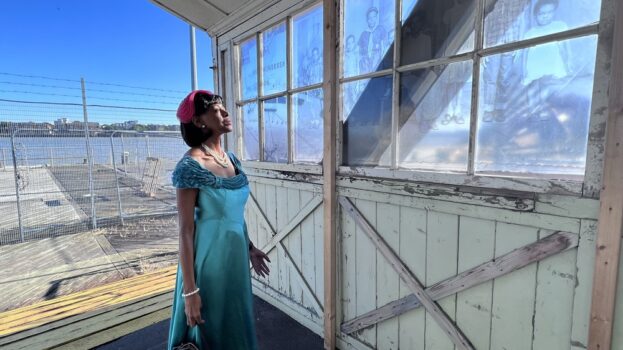
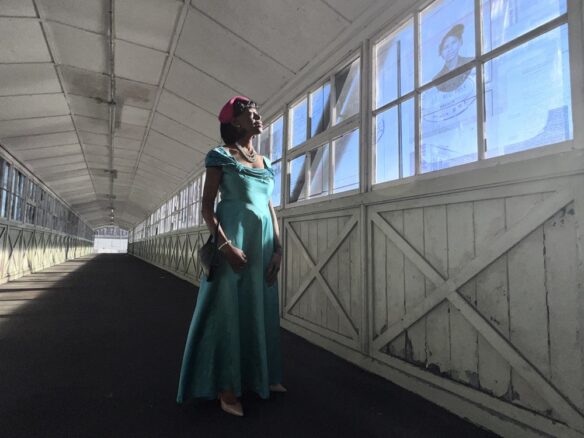
The film does not shy away from political issues in framing the context of my own Black British Identity and experiences. It intentionally brings the personal perspective of a wider social and political period so people can connect with my story. I was born in Birmingham during the 1960’s.The film reflect on my own lack of awareness as a child growing up in a city where Enoch Powell made his infamous ‘Rivers of Blood’ speech about immigrants in 1968. It also talks of the White Defence league who are represented in imagery on Tilbury Bridge Walkway of Memories, an artwork created by artist EVEWRIGHT which was vandalised in 2022 for what it represented. We cannot ignore the hostile welcome our parents received or the continued impact of race post George Floyd, Black Lives Matter or the Windrush Scandal. The film is a tribute to people from the Windrush Generation and is a reminder that the issue of Black British identity is even more pressing today with the rise of right-wing political parties nationally and the topic of migration high on the political agenda.
What does “home” mean to you now after making Here I Stand?
“Home” can be a conflicted word. I am a Windrush descendant born in the UK. Yet I have Jamaican heritage and ancestors who are part of who I am. I am Black British yet the film reinforced the feeling that home can be a spiritual, ancestral or a physical place and I connect with all of them.
Windrush descendants inherit stories, but also silence. How do we begin preserving these histories before they disappear?
I am joint founder along with artist EVEWRIGHT of Evewright Arts, https://www.evewrightarts.org. We set up the organisation in 2017 with a mission to preserve Black British stories through art and storytelling. We realised the importance to record first-hand accounts of stories from Windrush elders before they were lost. With funding from the Heritage Lottery, we interviewed over 25 people from the Windrush Generation whose stories are now archived at Essex Record Office. Artist EVEWRIGHT created the artwork Tilbury Bridge Walkway of Memories https://www.evewrightarts.org/tilbury-walkway located at the original walkway where passengers from the Empire Windrush arrived in 1948, and we produced legacy publications to share with the public to preserve Black British stories. https://www.evewrightarts.org/shop
We must all continue to preserve Black British stories by recording our parents, or grandparents’ stories, speaking to relatives, sourcing photos from our parents’ albums and digitising them. I interviewed my mum in 1995 on a tape cassette. It became the start of a life-long journey even though while she was alive I wish I had asked more. As descendants we must be proactive in keeping our elders’ stories alive and not think they have no value as this perpetuate the ‘silencing’ of our past. My generation are now the witnesses of the Windrush generation who gave up so much and are a source of inspiration for ours and future generations to continue building our place in all spheres of British Society.
What do you think your younger self needed to hear about your parents’ journey that perhaps wasn’t spoken about enough growing up?
Questions like why my parents had to be landlords and my experience living in a household of newly arrived lodgers to the UK and jostling for my voice to be heard amongst my siblings wasn’t questions asked. Being fed, having a roof over our heads in a crowded household, making do and hand me downs, was an accepted lived experience growing up. Yet love was always there so there was comfort with that unspoken knowledge.
There’s dignity throughout the film, even in moments of hardship. Why was it important to show Caribbean resilience without romanticising struggle?
Caribbean resilience was a coping mechanism. My parent’s ability to keep going in the face of adversity, inequality, racism, and discrimination was typical of this spirit. Often desperation to make ends meet and just survive is the motivation. It wasn’t a way of being they chose. In fact, often there was no choice. Romanticising my family’s own struggle would be a disservice and ignore the real depth of what they had to endure.
How important is it for Black British art to move beyond trauma and also explore tenderness, beauty and memory?
I cannot speak for all artists. For me, as a writer and poet I don’t feel I should be burdened with creating work that reflects only traumas. I have the right to explore all aspects of the human experience and that includes tenderness, beauty or memory which provides the full spectrum of our humanity. Here I Stand explores one aspect of my Black British experience of struggle but also hope, expectations and fulfilment in the capacity of the generations to follow.
When audiences watch Here I Stand, what do you most hope they understand about the generation who came before us?
Here I Stand looks at the painful fractures of migration, its ultimate destination is hope and fulfilment. It proves that a story of resilience can hold both the scar and the healing at the same time. The film is complemented with a poetry booklet called Resilience a collection of 10 poems which stand powerfully on their own, yet they provide a profound emotional layer to the film Here I Stand. This collection acts as the poetic heartbeat to the film’s exploration of my personal experience as a child of the Windrush legacy.
To find out more about Ionie Richards, where to see the film screening of Here I Stand or to purchase Resilience and other legacy publications go to:
https://www.ionierichards.com and https://www.evewrightarts.org/
…