
Few bands can claim to have created music that continues to resonate across generations, decades after it was first recorded. Fewer still can say their influence lives on through sampling, education and the countless artists inspired by their work.
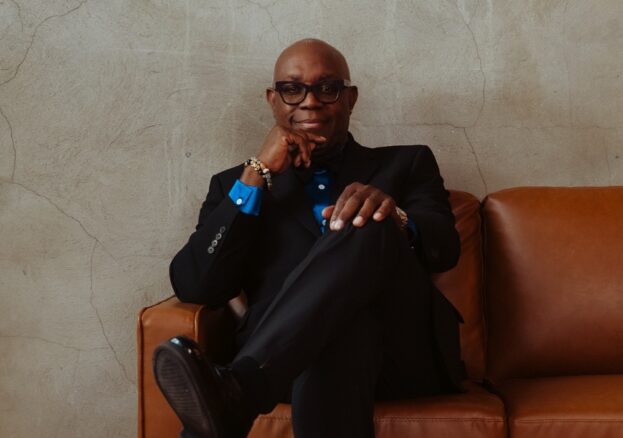
For Keith Killgo, a founding member of the legendary Blackbyrds, success has never been measured solely by chart positions or platinum records. Instead, it has always been about purpose, people and passing on knowledge.
Speaking with warmth, humility and quiet conviction, Killgo reflects on a remarkable journey that has taken him from the neighbourhoods of Washington, D.C., to concert halls across the world. Yet, despite international acclaim, his heart has never strayed far from the community that shaped him.
Doing It in the Park
One of The Blackbyrds’ most iconic recordings, Rock Creek Park, emerged from an impromptu jam during a soundcheck.
As the band experimented with grooves before a performance, something special began to take shape. Returning to Washington, D.C., the melody naturally found its identity as memories of childhood surfaced.
Rock Creek Park was where friendships were forged, families gathered, bikes were ridden and life unfolded.
“It was part of our DNA,” Killgo recalls. “When we started singing it, it just fell together.”
What began as a deeply personal reflection has become an international anthem, sampled by artists around the world and celebrated by generations who may never have visited the park itself.
Beyond the Music
While audiences know The Blackbyrds for timeless classics such as Walking in Rhythm and Rock Creek Park, Killgo believes the band’s greatest achievement lies elsewhere.
Under the guidance of jazz legend Donald Byrd at Howard University, the group became proof that education and artistic excellence could thrive together.
“When people tell the story of The Blackbyrds,” he says, “I hope they remember that we started as musicians, but we infused education into everything we did.”
For Killgo, the band’s journey represents something far greater than commercial success.
“It represented that you could take five Black men and grow them into professionals.”
His voice becomes emotional as he reflects on those early years.
“We had no idea how the music business worked. We didn’t know about royalties or recording or any of that. But now we can teach the next generation. Hopefully, that’s the legacy that lives on.”
Technology Changes. Humanity Doesn’t.
As both a musician and educator, Killgo has witnessed extraordinary change in the music industry. He embraces technological innovation, recognising the opportunities digital platforms create for artists to reach global audiences. Yet he also believes there are important lessons that technology can never replace.
“You can’t AI a violin,” he says with a smile. “You have to play it.”
While artificial intelligence offers exciting possibilities, he believes the emotional connection between performer and instrument remains irreplaceable.
“That’s where the emotion comes from. AI can’t feel what’s in your heart.”
He also advocates for stronger accountability around sampling and intellectual property, believing innovation should never come at the expense of recognising those whose creativity laid the foundations.
Community Is Everything
Perhaps the most powerful moments of the conversation come when Killgo speaks not about music, but about people.
Although he has spent decades touring internationally, he continues to teach young people in Washington, D.C., working with students whose lives are often shaped by poverty, homelessness and violence.
For him, community is a daily commitment.
“Community is everything,” he says.
“It is where people get those experiences. It’s where people get to know who you are.”
Teaching, mentoring and simply showing up have become as important as performing on stage.
“I teach children whose families have lost everything. Sometimes what people need isn’t complicated. It’s someone asking, ‘How are you? How are you feeling?’”
His work reminds him that genuine service cannot be performed from a distance.
“I don’t think we as artists do enough,” he reflects. “Everybody wants to start a foundation. But what are we really doing? How are we really serving these people?”
It is a challenge directed not only at musicians, but at all of us.
A Goosebumps Moment
Despite a career spanning more than five decades, one of Killgo’s most treasured memories happened only recently.
Performing at London’s Union Chapel, The Blackbyrds finally played their music accompanied by live strings—something audiences had heard on their recordings but rarely experienced in concert.
Standing quietly during the soundcheck, Killgo was overwhelmed.
“It was one of the most elating concerts I’ve ever played.”
For an artist whose catalogue has stood the test of time, it was a reminder that music can continue to reveal new beauty, even after decades.
Honouring Our Communities
As Black History Month celebrates the theme Honouring Our Communities, Keith Killgo embodies exactly what that phrase represents.
His story is not simply one of musical achievement. It is a testament to lifelong learning, mentorship, generosity and service.
From creating timeless music to shaping future generations in the classroom, he has remained committed to the belief that talent carries responsibility.
“If you can connect with the community,” he says, “the community will serve as your base.”
His message is both beautiful and simple.
Success is not only measured by what we achieve, but by what we leave behind.
Perhaps that is why The Blackbyrds continue to inspire. Their greatest legacy is not just the soundtrack they created, but the doors they opened for others to walk through.