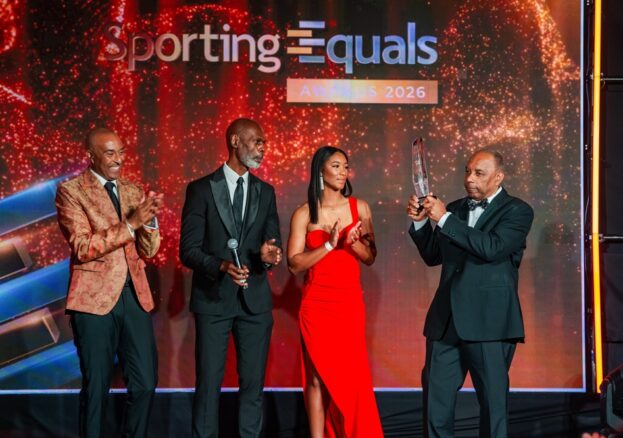
Held at the Royal Lancaster Hotel on 18 April 2026, the annual ceremony marked its ninth year, continuing its mission to spotlight individuals and organisations driving meaningful progress in race equality and inclusion. Hosted by Olympic legend Colin Jackson MBE, the night served as both a celebration of achievement and a reminder of the work still to be done.
At the heart of the evening were figures whose careers have reshaped British sport and inspired generations.
Maro Itoje, already one of rugby’s most prominent figures, was named Sportsman of the Year for the second time. His recognition follows a historic milestone—becoming the first Black player to captain the British & Irish Lions—an achievement that carries significance far beyond the game itself.
In women’s rugby, Sadia Kabeya was awarded Sportswoman of the Year, acknowledging not only her performances on the pitch but her growing influence within the sport. Her recognition signals the continued rise of a new generation of athletes building on the foundations laid before them.
Two of the evening’s most powerful moments came with the presentation of the Special Lifetime Achievement Awards to Maggie Alphonsi MBE and Roland Butcher. Alphonsi, widely regarded as one of the most influential figures in women’s rugby, reflected on the legacy of those who paved the way:
“I would like to acknowledge the trailblazers who went before me… who have enabled my journey to be possible.”
Roland Butcher, who made history as the first Black man to play cricket for England, spoke with humility about joining a distinguished group of past recipients:
“It’s a great honour to be recognised alongside such a prestigious group who have received this award.”
Throughout the evening, the awards highlighted not only elite sporting success but also the vital work happening at grassroots level—where community organisations and local leaders continue to challenge barriers and expand access to sport.
Sporting Equals Chair, Dr Howard Haughton, captured the wider significance of the night:
“These awards recognise individuals and organisations who are not only succeeding at the highest level, but who are also challenging systemic barriers, opening doors, and ensuring that progress in sport reflects the diversity of our communities.”
That message was echoed by Phil Smith of Sport England, who noted that the current climate makes this work even more critical:
“Progress that once felt secure is being questioned… which makes the work we’re celebrating not just important—but essential.”
For Acting CEO Nik Trivedi, the evening represented something deeper than recognition:
“This was more than a celebration. It was a recognition of those who have led from the front, often in the face of adversity… inspiring the next generation to step forward with confidence and belief.”
As the night drew to a close, it was clear that the Sporting Equals Awards are not simply about honouring past and present achievements—they are about shaping the future.
At a time when conversations around equity and representation continue to evolve, the stories celebrated here serve as powerful reminders: progress in sport has never been accidental. It has been driven by individuals willing to challenge the status quo, open doors, and ensure that talent—wherever it comes from—has the opportunity to thrive.
Full list of selected winners:
- Sportsman of the Year – Maro Itoje
- Sportswoman of the Year – Sadia Kabeya MBE
- Lifetime Achievement Awards – Maggie Alphonsi MBE, Roland Butcher
- Young Sportsperson of the Year – Eva Okaro
- Community Champion – Salma Bi BEM