
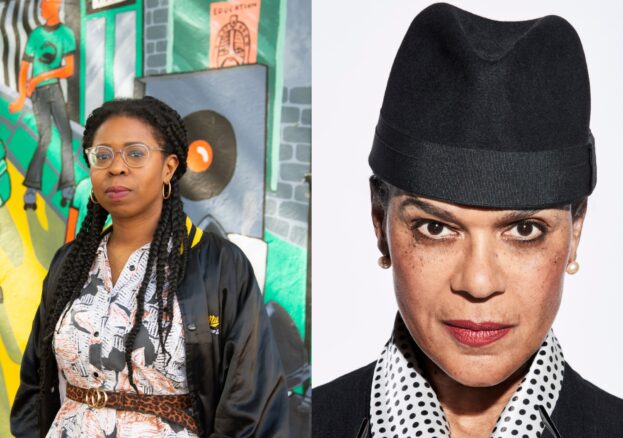
Who gets remembered when the history of rock and alternative music is written?
Musician, journalist and writer Stephanie Phillips comes to Warwick Arts Centre to reclaim the stories of Black artists whose innovations helped create and continually reshape rock ‘n’ roll, punk and alternative music.
Phillips will discuss her new book We Were Here: A History of Black People and Alternative Music in conversation with Pauline Black, the pioneering singer and frontwoman of Coventry’s legendary 2-Tone group The Selecter.
The event challenges the widespread perception that rock and alternative music are predominantly white cultural forms. Instead, Phillips traces an alternative history in which Black musicians, performers and innovators are placed back at the centre of the story.
Among the figures explored are Sister Rosetta Tharpe, Little Richard, Jimi Hendrix, Tina Turner, Betty Davis, Poly Styrene and Bad Brains, demonstrating how Black creativity has repeatedly disrupted and expanded the boundaries of popular music.
Stephanie Phillips brings a particularly valuable perspective to that history. Alongside her work as an arts and culture journalist, she founded the Black feminist punk band Big Joanie, giving her firsthand experience of navigating contemporary alternative music as a Black woman.
Her conversation partner Pauline Black adds another remarkable dimension. Inspired by punk and reggae during the 1970s, Black joined The Selecter and became one of the most recognisable figures associated with Britain’s 2-Tone movement.
Coventry is therefore an especially fitting location for this conversation. The city’s 2-Tone history demonstrates how Black Caribbean music, punk and working-class British culture could collide to create something new and politically significant.
Taking place during Black History Month, We Were Here provides an opportunity to broaden the musical history we inherit and ask why certain artists have been celebrated while others have disappeared from conventional accounts.
For music fans, cultural historians and anyone interested in Black British identity, rock, punk or 2-Tone, this promises a fascinating conversation about the Black musicians who were never on the margins of alternative music — even if the history books sometimes placed them there.
More Coventry Listings MORE
African Soul Rebels: Les Amazones d’Afrique, Gasper Nali + N’famady Kouyaté
African Soul Rebels brings an extraordinary celebration of contemporary African music to Coventry, with Les Amazones d’Afrique, Gasper…
Ballet Black at 25
Ballet Black at 25 comes to the Belgrade Theatre for a special one-night performance, celebrating 25 years of…

Blaze FM
Blaze FM brings an explosive mix of theatre, Grime, Garage, Drill and Jungle to Coventry for Black History…
Stephanie Phillips and Pauline Black – We Were Here: A History of Black People and Alternative Music
Who gets remembered when the history of rock and alternative music is written? Musician, journalist and writer…
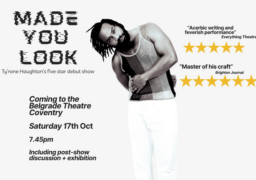
Made You Look
Made You Look is a powerful one-man poetry performance exploring masculinity, migration, identity and what it means to…
Black History Month Showcase
Young performers take centre stage at Blue Coat Theatre for a special evening of music, dance, drama and…
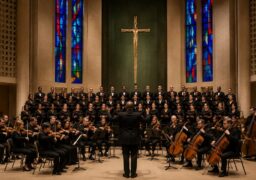
Nathaniel Dett’s The Ordering of Moses
Coventry Cathedral brings its Black History Month 2026 programme to a powerful conclusion with a special performance of…
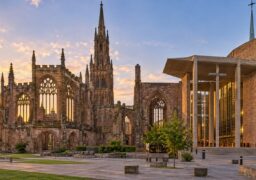
The Ordering of Moses Concert at Coventry Cathedral
Coventry Cathedral hosts a rare performance of R. Nathaniel Dett’s powerful oratorio The Ordering of Moses in a…