The National Maritime Museum will mark International Slavery Remembrance Day with a free public programme exploring remembrance, resistance and reparative justice.
Taking place across the National Maritime Museum, Queen’s House and Caird Library in Greenwich on Sunday 23 August 2026, the event will bring together artists, filmmakers, researchers and community practitioners to consider how museums and cultural institutions can confront histories of enslavement and their continuing legacies.
This year’s programme asks what remembrance can mean beyond commemoration. Through workshops, performances, films, archives and public conversations, visitors will be encouraged to consider how creative practice can challenge established historical narratives and contribute to a broader understanding of justice and repair.
International Slavery Remembrance Day commemorates the uprising that began in the French colony of Saint-Domingue, now Haiti, on 23 August 1791. The uprising became a defining moment in the resistance to enslavement and eventually led to the establishment of Haiti as the world’s first independent Black republic.
The day honours the lives, courage and resistance of enslaved African people while encouraging reflection on the lasting effects of slavery and colonialism.
Remembrance, repair and cultural justice
The programme will open at the Queen’s House with an introduction from the event’s curators, followed by a keynote address from Dr Wanda Wyporska, Chief Executive of Black Cultural Archives.
Dr Wyporska will reflect on the continuing legacies of transatlantic slavery and colonialism, as well as the role that museums, archives and cultural institutions can play in supporting remembrance, dialogue and reparative practice.
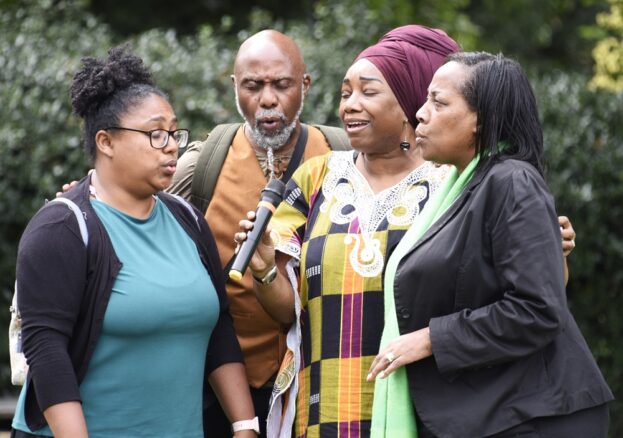
The opening will also feature a musical performance by Ethnovox choir, bringing together songs of remembrance, resilience and hope.
Throughout the day, visitors will be able to participate in workshops examining memory, resistance, power, cultural heritage and collective renewal.
Artist facilitator Love Hannington will lead a creative workshop inspired by the Fon Stool from Porto-Novo in the National Maritime Museum’s collection. Participants will explore the political alliances and colonial relationships connected to the object, considering how power was represented and maintained during and after abolition.
Ethnovox will also lead Sing Freedom, a participatory singing workshop drawing on African songs of struggle and hope, music sung by enslaved people in the United States and Caribbean, songs from the Windrush generation and contemporary music connected to equality and inclusion.
Artist Jahnavi Inniss will invite visitors to contribute to a collaborative textile artwork inspired by the collections of Royal Museums Greenwich. Drawing on quilting traditions and collective making, the workshop will examine memory, resistance, community and repair.
Black film, archives and artistic responses
A film programme curated by June Givanni will run throughout the day, featuring work by contemporary artists and filmmakers exploring slavery, colonialism, cultural memory and Black resistance.
Materials from the June Givanni Pan African Cinema Archive will also be displayed, highlighting the importance of preserving and sharing the histories of Black filmmaking and moving-image culture.
Later in the afternoon, June Givanni and filmmaker, writer and curator Imruh Bakari will discuss Pan-African cinema, archives and cultural memory.
At the Queen’s House, artist Sharon Walters will lead visitors through The Many Invincible Ones, her display inspired by historic photographs held in the National Maritime Museum’s collection.
Through collage, metalwork and mixed-media pieces, Walters centres the stories and experiences of women of African descent while exploring resilience, reconnection, healing and hope. She will later join curator Nydia Swaby for a conversation about the research behind the display and the role contemporary artists can play in reinterpreting museum collections.
Poet Esme Allman will respond to the themes of reparation and repair through a new long-form poem informed by archival research. The work will consider justice, agency and the ways in which histories of enslavement continue to shape contemporary life.
Emancipation Walk to the River Thames
The programme will conclude with a collective act of remembrance led by Ethnovox.
Participants will walk together from the Queen’s House to the River Thames, honouring the lives, resistance and enduring legacy of enslaved African people. At the river, visitors will be invited to scatter flower petals in memory of those affected by the transatlantic slave trade and everyone who fought for freedom, justice and equality.
Event information
Date: Sunday 23 August 2026
Time: 11.00am–5.00pm
Venue: National Maritime Museum and Queen’s House, Greenwich, London SE10 9NF
Admission: Free
Visitor enquiries: 020 8858 4422
For the complete programme and visitor information, visit the Royal Museums Greenwich website.