
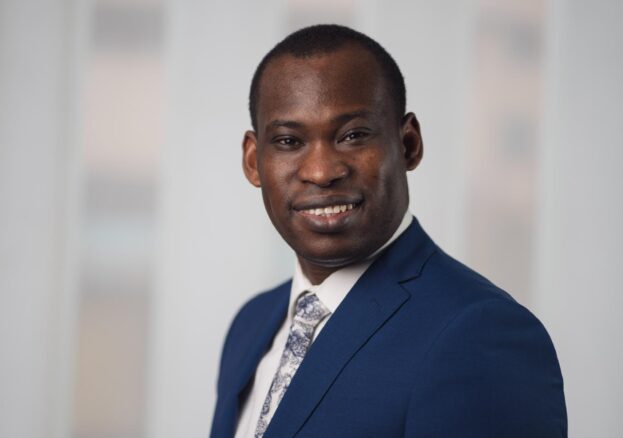
Every transformative movement begins with individuals who challenge the limitations imposed by existing systems. For many Black and Mixed-Black heritage students, particularly in Sheffield and Manchester, that individual is Dr Francis Ifedapo Awolowo.
Dr Francis, a Senior Lecturer in Financial Management Accounting at Sheffield Hallam University, is the visionary behind the Accomplished Study Programme in Research Excellence — ASPIRE — an initiative designed to prepare Black and Mixed-Black heritage students for doctoral study.
Developed through collaboration between Sheffield Hallam University, Manchester Metropolitan University and Advance HE, ASPIRE was intentionally created by Black academics for Black students. Its mission is clear: to dismantle barriers that have historically restricted access to postgraduate research and nurture a generation of confident Black scholars.
What distinguishes ASPIRE is the passion driving it. Dr Francis developed the programme from personal experience, recognising the challenges many Black students encounter in academic environments where representation is limited and pathways into research can feel unclear.
Rather than accepting these realities, he chose to create an environment where Black students are acknowledged, prepared and empowered. Since its launch in 2021, ASPIRE has mentored fifty-nine Black and Mixed-Black heritage students, with fifteen progressing to fully funded PhD programmes. Behind those figures are changed lives, new opportunities and futures that once seemed beyond reach.
Central to these accomplishments is Dr Francis’s unwavering commitment as a mentor. He actively engaged with the scholars he supported, dedicating long evenings to preparing us for the realities of doctoral applications. He organised mock interviews to build our confidence and reviewed our research ideas, challenging us to think critically while offering encouragement during moments of self-doubt.
Dr Francis also invested in our lives beyond academia. During late-night preparation sessions, he remained present, providing guidance, encouragement and reassurance. For many of us, these moments became sources of spiritual support.
He prayed with us and reminded us that our journeys mattered, emphasising that our presence in research spaces was significant. When we questioned whether we belonged, he spoke passionately about the importance of our voices and scholarship.
One of the most powerful aspects of his mentorship was his advocacy for us in spaces we had yet to access. He mentioned our names in rooms where we were absent and highlighted our potential to colleagues, institutions and decision-makers. In doing so, he opened doors we had not known existed.
Personally, the influence of ASPIRE and Dr Francis’s mentorship is immeasurable. I often contemplate what my path might have been had I not met him and become part of the programme. His encouragement gave me the confidence to pursue opportunities I once considered unattainable.
I am now a second-year doctoral researcher at Sheffield Hallam University. His influence also led me to become a published author, inspiring me to write about mentorship itself after experiencing firsthand how a mentor can alter the direction of a life.
Dr Francis helped us reimagine ourselves. He reshaped our understanding of our potential and our responsibilities as emerging scholars. Many students who have passed through ASPIRE now carry that same commitment to mentorship, representation and service into their professional journeys.
His leadership has created a ripple effect. The scholars he has mentored have opportunities to supervise students, influence research, contribute to policy and support others who follow in their footsteps. The impact of that encouragement can continue far beyond the programme itself.
At a time when discussions about inclusion in higher education can remain largely theoretical, Dr Francis has demonstrated what meaningful change looks like. He has created a community where Black students are prepared, supported and encouraged to pursue research excellence.
His belief is that when people are truly seen, supported and believed in, they can succeed and make a difference to the world around them. For those of us who have experienced his mentorship, that belief is reflected in the time, care and commitment he gives.
Black British history is shaped by people who create pathways for others. Dr Francis firmly belongs among them. Through his vision, mentorship and steadfast advocacy, he has helped Black scholars recognise their potential and take their place within academic life.
For his leadership, his personal investment in students’ lives and his contribution to educational equity, I believe Dr Francis deserves recognition as someone helping to shape a more inclusive academic future.