
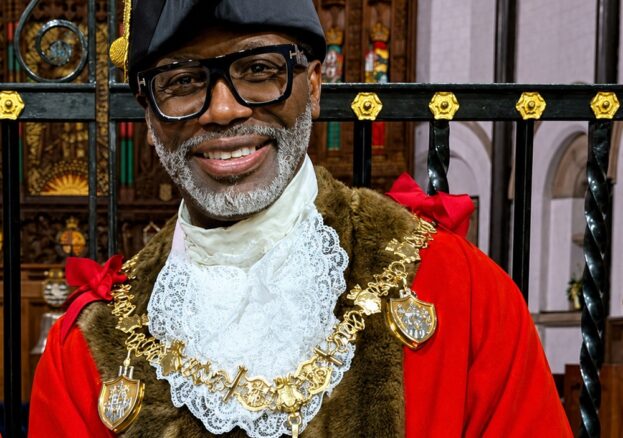
Douglas Hamandishe has spent much of his working life serving others. Before becoming Mayor of Medway, he worked for more than 20 years as a mental health nurse and later became a digital health leader.
As a Black Mayor who arrived in Britain as a refugee, he understands the importance of representation — but believes visibility must be matched by genuine opportunity.
For Black History Month, we spoke to Douglas about Honouring Our Communities, what leadership means to him and why some of the people making the greatest difference are often those receiving the least recognition.
What does “Honouring Our Communities” mean to you?
Douglas Hamandishe: For me, this theme is deeply personal.
Community is not defined by geography. It is not a postcode or a collection of buildings. Community is people. It is the neighbour who quietly checks on an elderly resident, the volunteer who gives up their weekends, the youth worker who refuses to give up on a young person, and the parent working two jobs while still finding time to support the local school.
As Mayor of Medway, I have the privilege of meeting these people almost every day. They remind me that leadership is not about standing in front of a community; it is about standing alongside it.
As a Black Mayor, I also recognise that representation matters. When someone sees a person who looks like them serving in civic leadership, they begin to believe those spaces belong to them too.
That is not about me. It is about widening the doorway for others.
Honouring our communities means making the invisible visible. It means celebrating those whose names may never appear in history books, yet whose kindness, courage and service shape history every day.
Who are the unsung heroes in your community?
Douglas Hamandishe: Without hesitation, our volunteers.
Across Medway, I meet people who give thousands of hours each year without asking for recognition. They organise community events, mentor young people, support families facing hardship, visit those who are lonely and simply make life better for somebody else.
I often say that anyone can turn a garden into a desert, but turning a desert into a garden takes courage, commitment, hope, faith and belief.
That is what our volunteers do. They cultivate hope where others see problems.
If we want stronger, more cohesive communities, we must celebrate those who serve rather than simply those who succeed.
What message does your election as Mayor send to young Black people who may never have imagined themselves in civic leadership?
Douglas Hamandishe: Never allow someone else’s imagination to define the limits of your own.
We often hear the phrase, “You have to see it to be it.” There is truth in that, particularly when representation has been lacking. But I would also encourage young people to believe in what they cannot yet see.
Every pioneer was once the first.
I arrived in Britain as a refugee. If you had told the younger Douglas that one day he would become Mayor of Medway, I probably would not have believed you.
Life has taught me that your circumstances may shape your story, but they never have to define your ending.
My election says something very simple:
You belong. Your voice matters.
Leadership is not reserved for certain people. It belongs to anyone willing to serve with humility, integrity and compassion.
If my journey encourages just one young person to believe they can make a difference, then becoming Mayor has achieved something far greater than wearing the chain of office.
How has your own experience shaped the way you lead?
Douglas Hamandishe: Before politics, I spent more than 20 years as a mental health nurse.
That taught me something no textbook ever could: every person carries a story that you cannot see.
I learned never to rush to judgement. Behind a difficult conversation there may be grief, trauma, fear or simply someone who feels unheard.
Being Black, being a refugee, working in healthcare and now serving as Mayor have reinforced one lesson: people flourish when they are treated with dignity.
Leadership begins with listening, but it cannot end there. It also means having the courage to take responsibility for difficult challenges.
What issue facing Black communities deserves greater attention from local leaders?
Douglas Hamandishe: Opportunity.
Not simply equal opportunity on paper, but genuine access to it.
Whether through education, apprenticeships, entrepreneurship, civic participation or leadership, too many talented people struggle to see a pathway forward.
Positive role models beyond music, sport and entertainment need to be more visible. Representation is important, but representation without opportunity changes very little.
Local leaders must create pathways that enable people not only to dream, but to participate, contribute and lead.
As Jabali Men’s Network encourages, we must “lift as we rise”.
At the same time, our communities must demand more of ourselves. Families, communities and institutions all have a role to play in educating, motivating and supporting our young people.
How can local authorities move beyond symbolic gestures and create lasting change?
Douglas Hamandishe: By listening before leading.
Communities do not need councils to arrive with all the answers. They need councils willing to work alongside them.
Real change happens through long-term relationships rather than one-off consultations.
We must invest in young people and support grassroots organisations over the long term so that their true impact can be measured.
Culture should also be celebrated throughout the year, rather than only during Black History Month.
Most importantly, success should not be measured by how many meetings were held, but by whether people’s lives genuinely improved.
That is how trust is built.
If you could introduce one initiative to increase opportunities, what would it be?
Douglas Hamandishe: I would establish a National Community Ally Leadership Programme.
It would connect experienced leaders from business, healthcare, education, politics and the voluntary sector with young people through mentoring, coaching and practical leadership experience.
Talent is everywhere.
Opportunity is not.
One conversation can change confidence. One mentor can change direction. One opportunity can change an entire family for generations.
Who are you honouring this Black History Month?
Douglas Hamandishe: I am honouring those whose names most people will never know.
The carers. The nurses. The teaching assistants. The foster parents. The community organisers. The youth workers. The faith leaders. The grandparents raising another generation. The volunteers who quietly transform lives without expecting recognition.
History is often written about extraordinary moments.
Communities are built through ordinary acts of extraordinary kindness.
These are the people who deserve our gratitude, not only during Black History Month, but every day.
If I had to name one individual, it would be Steve Biko. His message about dignity, identity and freeing the mind continues to resonate with me.
Before a community can transform its circumstances, it must first believe in its own worth, power and potential.
About Douglas Hamandishe
Douglas Hamandishe is the Mayor of Medway, a registered mental health nurse, digital health leader and advocate for community cohesion. Having arrived in Britain as a refugee, his journey has been shaped by resilience, public service and a belief that leadership is measured not by status, but by service.