
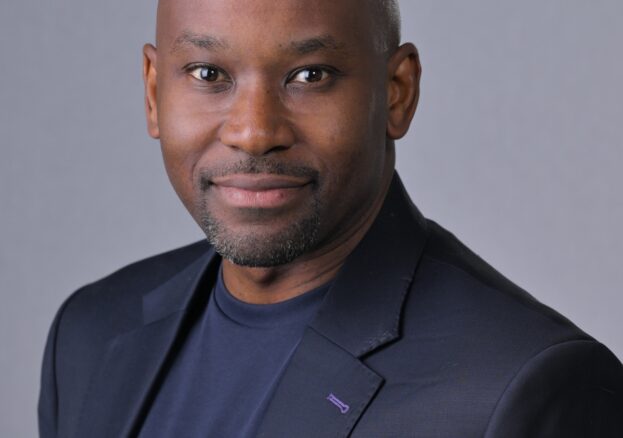
Trevor Blackman believes that conversation can change lives—but only when people are genuinely heard.
Across more than two decades of work in youth development, broadcasting and community leadership, he has created opportunities for people whose voices are frequently overlooked. His work brings together education, media, culture and social justice, with a particular focus on improving the life chances of young people.
Since 2020, Trevor has served as Chief Executive Officer of Edmonton Community Partnership in north London. The partnership connects 21 schools with more than 40 community organisations, bringing education and community support closer together.
Its programmes create opportunities in science, technology, engineering and mathematics, as well as music, media, sport, wellbeing and the arts. The work supports children and young adults between the ages of six and 25, while also recognising the importance of families and the wider community.
At the centre of Trevor’s approach is a simple question: what happens when talent exists but access does not?
Young people may have ability, ambition and ideas but lack the professional networks, equipment, training or confidence needed to develop them. Schools can play an important role, but they cannot address every challenge alone. Trevor has helped Edmonton Community Partnership build relationships that connect young people with organisations and adults able to support their development.
The aim is not to decide a young person’s future for them. It is to widen the range of futures they can imagine and give them practical opportunities to explore those possibilities.
Trevor has mentored thousands of young people and adults during his career. His nomination highlights his particular commitment to Black LGBTQ+ boys, who can experience racism and homophobia while also struggling to find spaces where all parts of their identity are understood.
Being seen and heard can be transformative for a young person. It tells them that their ambitions matter and that they do not have to hide who they are to be accepted. Trevor’s mentoring seeks to provide that recognition while also offering honest guidance, challenge and encouragement.
His work with young people is closely connected to his career in broadcasting. Over almost 20 years, Trevor has worked with organisations including the BBC, ITV, Kiss FM and Choice FM. He is also the creator and presenter of Trevor Blackman Now on Maritime Radio.
The programme is built around thoughtful and sometimes challenging conversations. Its guests have included educators, artists, activists, grassroots organisers and community leaders from across Black Britain and the wider African diaspora.
Rather than speaking about communities from a distance, Trevor creates space for people to describe their experiences in their own words. The conversations explore culture, education, politics, identity and the decisions affecting people’s everyday lives.
Broadcasting, for Trevor, is therefore more than entertainment. It can connect people who may never meet, bring local concerns to a wider audience and introduce listeners to ideas and experiences that receive little attention elsewhere.
He has taken this mission further through Ape Media, a platform dedicated to amplifying under-represented voices and developing community-focused storytelling. Through the organisation, Trevor has also been working to establish #ALLINRadio, a speech-led digital radio station intended to serve young Black and ethnically diverse listeners while remaining open to everyone.
The proposed station combines news, culture, current affairs and personal storytelling with content created and led by young people. An important part of its purpose is training the next generation of broadcasters, giving young participants the opportunity to learn how to research, produce and present their own programmes.
This matters because representation is not only about who appears in front of a microphone. It is also about who selects the stories, asks the questions, controls the equipment and makes editorial decisions.
By teaching young people the complete process of broadcasting, Trevor is helping them move from being the subject of media coverage to becoming creators with the power to shape their own narratives.
His experience has also been recognised through the Clore Leadership Programme, and he was selected for the British Council’s Cultural Leaders International scheme. He has contributed to national conversations about youth strategy, bringing the experience of community work into discussions about how services and opportunities for young people should be developed.
Yet Trevor’s influence is perhaps most clearly understood at a local level. It can be found in a young person making their first radio programme, a family finding support through a community partnership or a student discovering an opportunity beyond the school gates.
It can also be found in the relationships between schools and community organisations. These connections help ensure that local knowledge is not ignored and that programmes are created with communities rather than simply delivered to them.
Trevor’s work across education and broadcasting is united by one belief: people grow when they are trusted with a voice and given the tools to use it.
His nomination describes a leader who has no intention of slowing down. Trevor says that he will “rest when I am dead”—a phrase that captures both his energy and his sense of urgency.
For him, there are still too many young people whose ability is not being recognised and too many important stories that remain unheard. Through Edmonton Community Partnership, his broadcasting and his mentoring, Trevor Blackman is working to close that distance between potential and opportunity—one conversation at a time.