
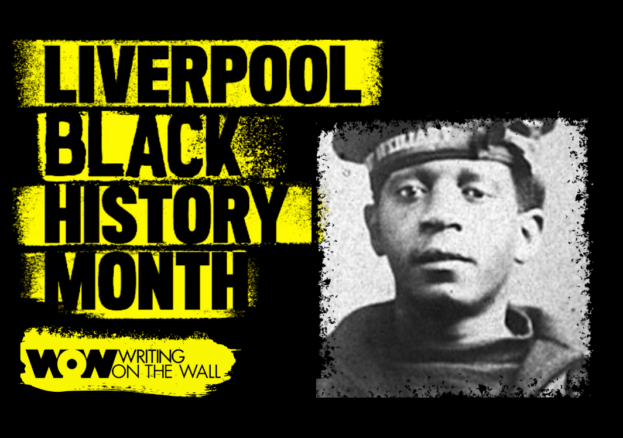
Discover the history of Liverpool’s Black community and the racial violence that erupted across the city in June 1919.
Inspired by Writing on the Wall’s Great War to Race Riots archive project and the Black Lives and Legacies 1919 project created with the University of Liverpool, this walking tour explores a little-known chapter in the city’s history.
The anti-Black riots of 1919 became a watershed moment for Liverpool’s Black community, one of the oldest established Black communities in Europe.
On the night of 6 June 1919, racial violence broke out around what is now Liverpool’s Chinatown and continued for several days. Black residents were attacked, while homes and businesses were looted and damaged. More than 700 members of the Black community were taken to the Main Bridewell, reportedly for their protection.
Among those who lost their lives was Charles Wotton, a 24-year-old Bermudian sailor. Contemporary newspapers described his death as a lynching.
After being pursued by police and a large crowd, Wotton entered Queen’s Dock. Accounts differ over whether he was pushed, thrown or fell into the water. Members of the crowd then threw stones at him as he struggled in the dock, where he drowned.
Using official court documents, contemporary newspaper reports and historical images, the tour will follow the events of 6 June and visit locations mentioned in official records. It will also trace Charles Wotton’s final movements through the city.
Participants will discuss the post-war racism and xenophobia that contributed to the violence, as well as its lasting consequences for Liverpool’s Black community.
About the tour leader
The tour will be led by Dr Andy Davies, Reader in Human Geography in the Department of Geography and Planning at the University of Liverpool.
His research covers cultural, political and participatory geography, with a particular focus on the legacies of colonialism.
His book, Geographies of Anticolonialism, explores how South Indian anticolonial activists imagined a world beyond colonial rule. He also works with communities, schools and organisations in India and the UK to examine education, environmental resilience and how colonial histories continue to shape places today.
Dr Davies played a key role in developing the 1919 Walking Tour.
Event enquiries:
info@writingonthewall.org.uk
More Liverpool Listings MORE
DEATH OF A SALESMAN
Arthur Miller’s Death of a Salesman is reimagined for Liverpool by acclaimed British-Ghanaian theatre-maker Tristan Fynn-Aiduenu in a…
BHM26: Professor Stephen Small – Black Liverpool
Professor Stephen Small returns to his home city to launch Liverpool’s Black History Month programme with a special…

Manchester Collective X Sidiki Dembélé: Constellations
Manchester Collective joins forces with Ivorian percussionist Sidiki Dembélé for Constellations, a vivid musical journey bringing West African…
BHM26: Dean Atta – Big Man
Join award-winning author, poet and filmmaker Dean Atta for a special event celebrating the publication of his adult…
Blackfest 2026 Presents: Visual Arts Workshop With Ayobami
Liverpool’s BlackFest 2026 invites audiences to explore colour, abstraction and expressive mark-making in a hands-on visual arts workshop…
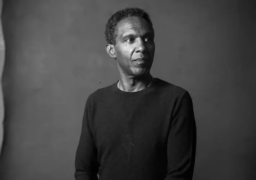
Black History Month Lecture with Lemn Sissay
Black History Month Lecture with Lemn Sissay brings one of Britain’s most distinctive poets, authors and broadcasters to…
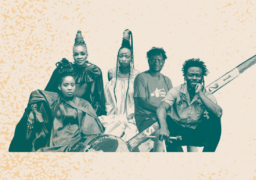
African Soul Rebels: Les Amazones D’Afrique, Gasper Nali and N’Famady Kouyaté
African Soul Rebels brings three distinctive African musical voices to Liverpool Philharmonic Hall for an evening of rhythm,…

Ibibio Sound Machine + Ziyad Al-samman
British-Nigerian frontwoman Eno Williams brings the electrifying Ibibio Sound Machine to Birkenhead for an October performance at Future…