
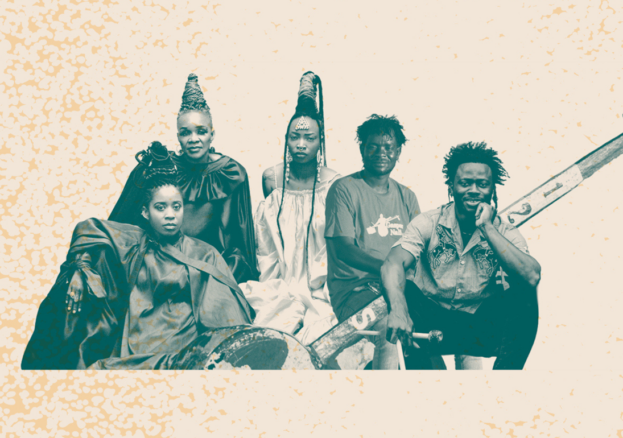
African Soul Rebels brings three distinctive African musical voices to Liverpool Philharmonic Hall for an evening of rhythm, innovation and cultural exchange led by the acclaimed Pan-African collective Les Amazones d’Afrique.
Formed by leading women musicians from West Africa, Les Amazones d’Afrique combine African musical roots with contemporary production, electronic textures and powerful vocals. Their work is closely associated with messages of women’s strength, unity and social change, demonstrating how music can be both a creative force and a platform for speaking about equality.
Joining them is Malawian musician Gasper Nali, whose extraordinary homemade babatoni bass is almost three metres long. With a single string, percussion, guitar and a cow-skin kick drum, Nali creates a sound that is immediately distinctive – playful, rhythmic and built for movement.
Guinean-born N’famady Kouyaté brings another West African tradition to the programme through the balafon, a wooden xylophone that is central to his family heritage as part of the griot or djeli tradition. Since relocating to Wales, Kouyaté has developed a growing UK following, combining that musical inheritance with contemporary influences. He was the winner of the 2023 Glastonbury Emerging Talent Competition.
Together, the three acts illustrate the breadth of contemporary African music. This is not a programme built around a single idea of an ‘African sound’. Instead, it moves between countries, instruments, languages and generations while showing how tradition can be reworked without being discarded.
That makes African Soul Rebels a natural highlight for Black History Month. The concert connects audiences with the depth of African musical heritage while emphasising that African creativity is modern, experimental and internationally connected.
Presented through Music Beyond Mainstream and Liverpool Philharmonic, the evening is designed as a revival of a touring platform that has long championed artists working beyond conventional commercial categories. For Liverpool audiences, it offers a rare chance to experience three very different African musical traditions sharing one major stage – rooted in history, but unmistakably focused on the present and future.
More Liverpool Listings MORE

DEATH OF A SALESMAN
Arthur Miller’s Death of a Salesman is reimagined for Liverpool by acclaimed British-Ghanaian theatre-maker Tristan Fynn-Aiduenu in a…
BHM26: Professor Stephen Small – Black Liverpool
Professor Stephen Small returns to his home city to launch Liverpool’s Black History Month programme with a special…

Manchester Collective X Sidiki Dembélé: Constellations
Manchester Collective joins forces with Ivorian percussionist Sidiki Dembélé for Constellations, a vivid musical journey bringing West African…

BHM26: Dean Atta – Big Man
Join award-winning author, poet and filmmaker Dean Atta for a special event celebrating the publication of his adult…
Blackfest 2026 Presents: Visual Arts Workshop With Ayobami
Liverpool’s BlackFest 2026 invites audiences to explore colour, abstraction and expressive mark-making in a hands-on visual arts workshop…
Black History Month Lecture with Lemn Sissay
Black History Month Lecture with Lemn Sissay brings one of Britain’s most distinctive poets, authors and broadcasters to…
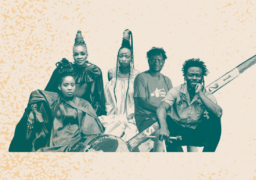
African Soul Rebels: Les Amazones D’Afrique, Gasper Nali and N’Famady Kouyaté
African Soul Rebels brings three distinctive African musical voices to Liverpool Philharmonic Hall for an evening of rhythm,…

Ibibio Sound Machine + Ziyad Al-samman
British-Nigerian frontwoman Eno Williams brings the electrifying Ibibio Sound Machine to Birkenhead for an October performance at Future…