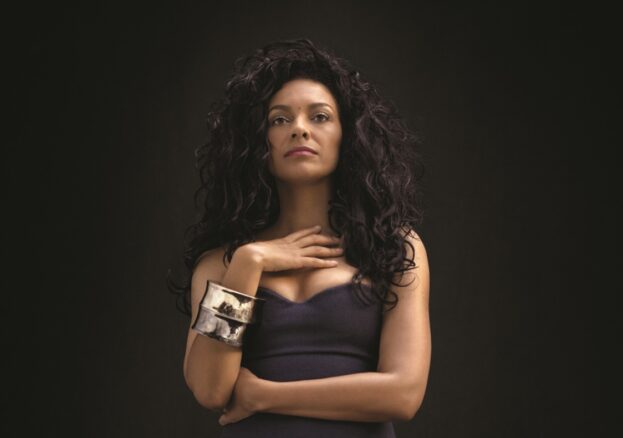
The Kanya the world knew was the founder, the visionary and pioneer, the woman who remortgaged her house to create a national platform that gave Black British music the recognition it deserved. The Kanya I knew was all of that too, but she was first a friend. She was funny in a way that surprised people who expected only the polished professional. She was fiercely loyal. She rang when you were quiet, not only when you were in the spotlight. She asked, and genuinely needed to know, how you really were. She noticed. She remembered. She held on to the small things: your mother’s health, your job interview, the piece of information you had almost forgotten telling her.
She was born in Kilburn on 12 February 1964, the youngest of nine children, to a Ghanaian father and an Irish mother. Her father died when she was thirteen. She had her son at sixteen and left school. A careers adviser told her she might, if she was lucky, one day manage the local supermarket. She spoke about that line for the rest of her life. “That put a fire in my belly,” she told the Evening Standard, “and gave me the motivation to say, why should I not have ambition?” She studied English literature at Goldsmiths. She worked as a television researcher at Carlton. And in 1996, she remortgaged her home, organised the first MOBO Awards in six weeks, and put the appreciation and celebration of Black British music on the national stage for the first time.
 What she built was not just an institution. It was an argument. A thirty-year insistence that Black music was not a subculture, not a genre, not a niche, but the beating heart of British culture. Before MOBO, Black artists were already shaping the sound of a nation that refused to see them in the mirror. Over the decades that followed, grime, UK garage, drum and bass, Afrobeats, R&B, gospel and reggae became central to British youth culture, yet remained too often marginalised by the institutions that claimed to represent British music. Black artists were present only at the margins, as guests in a house they had largely furnished themselves. Kanya did not wait for an invitation to change that. She built the alternative institution.
Kanya King built what we now call British music. That sentence is not sentiment. It is the plain historical record. In March 2026, UK Music’s landmark Black Music Means Business report estimated that music genres of Black origin had contributed more than eighty per cent of the total value of recorded music in the UK over the past thirty years: £24.5 billion out of a £30 billion market. The industry that told her in 1996 there was no market for Black music had, in fact, been sustained by the culture she refused to let be ignored. She built the market anyway.
What is remarkable in retrospect is not just that she did it, but how thoroughly she did it.
MOBO was no gesture. It became a professionally run, globally recognised organisation with infrastructure, reach and authority. It went from the Connaught Rooms on 18 November 1996 to arenas. It moved out of London to cities including Glasgow, Liverpool, Leeds, Coventry, Sheffield, Newcastle and Manchester, a deliberate act of cultural geography that said Black music belonged to the whole of Britain. She built MOBO Unsung to nurture emerging talent before the mainstream knew their names. And in the final year of her life, she opened the House of MOBO in Gipsy Hill, South London: a community venue, a gathering place, a physical declaration that belonging is something you build when the existing structures will not build it for you.
She did not just succeed personally. She changed what was structurally possible. She created a model of Black-led institutional authority, of cultural legitimacy built outside the existing power structures, that others now operate within.
Her values were straightforward and she lived them. She believed Black music was British music, and that the country had a debt to the artists who had shaped its sound while being kept at its margins. She believed young people should not have to risk everything to be seen. She believed in mentorship, not as a slogan but as a habit: the phone calls, the introductions, the quiet advocacy in rooms the mentee never knew about.
Artists including Stormzy, Little Simz and Ms Dynamite did not simply emerge. They rose into a landscape Kanya had transformed. Craig David, Skepta, Kano, Amy Winehouse and Dave all stood, at some point, on a stage she had built with her own determination and nerve. MOBO changed the terms of recognition for Black artists in British music. It forced mainstream Britain to acknowledge Black creativity on its own terms rather than on terms negotiated by gatekeepers who had never believed it belonged there.
Kanya was a formidable networker. The warmth, the encouragement, the way she changed the temperature of every room she entered: those were not merely personal qualities. They were the engine of everything she built.
Over almost thirty years, I witnessed what the world rarely sees: the late-night calls, the scribbled plans, the moments of private doubt followed immediately by that unshakeable resolve. I watched her carry whole communities on her shoulders while still remembering every birthday, every quiet grief, every dream someone had mentioned only once, months before. She held people. She held me.
There was a cost. Building an institution from nothing, in a culture that has historically treated Black creativity as raw material rather than intellectual and artistic leadership, exacts a price that is rarely spoken about openly. The isolation of being the first. The exhaustion of having to prove, again and again, what should never have been in doubt. The emotional labour of carrying not just your own organisation but the hopes of a community that has been told, for generations, that its culture does not count. Kanya carried that. I watched her carry it with what looked like ease, and I knew, from the inside of our friendship, how much invisible weight that ease concealed. Black women who build institutions in hostile environments do not simply face professional obstacles. She faced a particular kind of structural loneliness: knowing she was doing something the system was not designed to support, and that if she stopped, it stopped. She never stopped.
She was extraordinarily brave. Her cancer was a deeply personal battle, fought with the same characteristic determination she brought to everything else. She used the last part of her life to campaign for early cancer detection, particularly in Black communities. She knew that the worse cancer outcomes faced by Black women in this country were not medical anomalies but consequences of structural inequality. It angered her. That anger belongs in her legacy too.
When cancer came in September 2024, I was there. Stage 4, they told her. There is no stage 5. She told me: “I have decided I am walking my own stage, on my own terms.” Months after being told she had months to live, she stood on the MOBO stage in Newcastle in February 2025 and told the room: “I never allowed someone to define my limits. Not in life. Not in business. And I am certainly not going to have that happen now.” I heard people ask her what it was like to be dying. She replied: “I am too busy living to know.”
The next generation of Black British creative leaders owes her more than gratitude. They owe her the same fearlessness, the same refusal to accept that Black excellence is anything other than central to British life.
For thirty years, Kanya King made space where there was none. For Black artists. For Black audiences. For a Britain that has still not fully thanked her. My task as her friend is simpler: to say that the woman behind the achievements was every bit as remarkable as the achievements themselves, that I loved her, and that I miss her.
Almost thirty years of friendship was not enough. It was never going to be enough.
Claudia Webbe was the Member of Parliament for Leicester East from 2019 to 2024. She was a close personal friend of Kanya King CBE for nearly three decades.
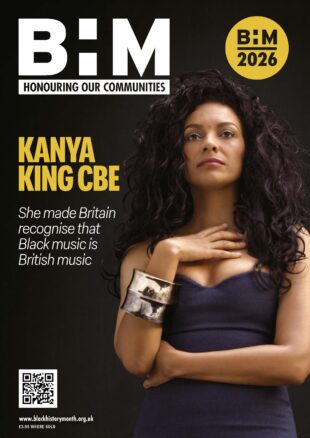
Kanya King CBE (1964-2026) Her funeral programme records her date of birth as 12 February 1964, the date I knew throughout our almost 30-year friendship. The year 1969, cited in many published profiles, is incorrect. Kanya passed away peacefully on 3 June 2026.