
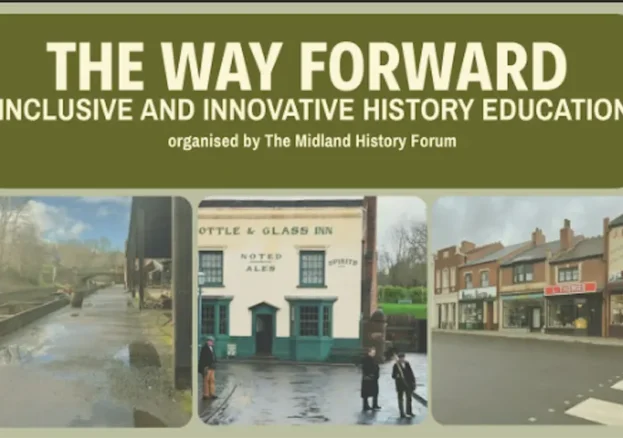
Teachers, historians and heritage professionals come together at Black Country Living Museum for The Way Forward: Inclusive and Innovative History, the 2026 annual conference of the Midlands History Forum.
Taking place during a period of change in history education, the conference asks how schools and educators can develop approaches to the past that are both academically rigorous and more representative of the diverse society in which young people are growing up.
The programme features keynote contributions from Professor Rebecca Harris of the University of Reading and Dr Michael Maddison of the Historical Association, alongside specialist workshops for people working across primary and secondary history education.
Contributors and participating organisations include the Black Heritage Walks Network, helping ensure that questions around Black history, heritage and representation form part of the wider conversation about what inclusive history education can look like.
For decades, calls to broaden Britain’s history curriculum have highlighted the need to move beyond occasional isolated lessons about slavery or the American Civil Rights Movement.
Black British history encompasses Roman Britain, Tudor England, abolition and empire, African and Caribbean migration, the World Wars, Windrush, anti-racist activism, culture, politics and the experiences of Black communities in towns and cities throughout the country.
Inclusive history is therefore not simply about adding new names to an existing curriculum. It can involve asking different questions, examining different sources and recognising how local, national and international histories are interconnected.
The conference provides practical opportunities for educators to explore those issues through workshops, exhibitors and networking with colleagues working across the Midlands.
Its setting at Black Country Living Museum is particularly appropriate. The wider history of the Black Country encompasses industrialisation, migration, labour, community development and changing social attitudes, providing rich material through which more inclusive approaches to local history can be developed.
While The Way Forward is not exclusively a Black History Month conference, its focus on inclusive historical practice and participation from the Black Heritage Walks Network makes it especially relevant to teachers and organisations looking to embed Black history beyond a single month of the school year.
For educators, heritage professionals and anyone interested in how Britain teaches its past, the conference offers an opportunity to exchange ideas and consider what the next generation of inclusive history education could look like.
More Dudley Listings MORE
The Way Forward: Inclusive and Innovative History
Teachers, historians and heritage professionals come together at Black Country Living Museum for The Way Forward: Inclusive and…

Black Country Society History Day: Protest and Dissent in Black Country History
The Black Country Society History Day returns to Dudley with a full programme examining the history of protest,…