
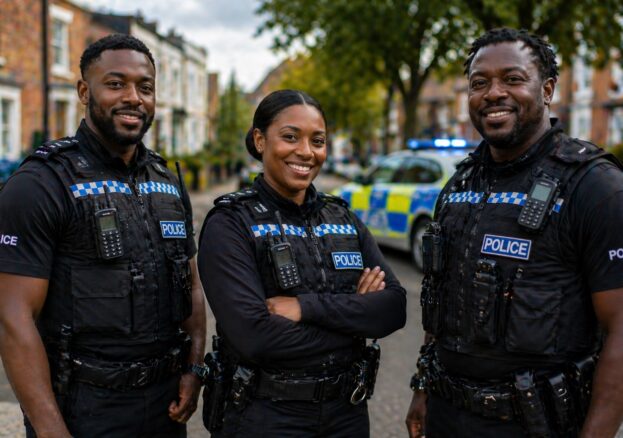
Becoming a police officer is not a simple career choice. It comes with pressure, responsibility, and moments where you are expected to make the right decision quickly. It also comes with scrutiny, expectation, and a level of public accountability that few other careers demand.
For many Black individuals, it can also feel like a difficult path to consider. The relationship between policing and Black communities has a long and complex history, shaped by both lived experience and public debate. That reality cannot be ignored. But it is also only part of the picture. Policing today is changing, and that change is being shaped not only by policy, but by people choosing to step forward and be part of it.
Across the country, there is a growing recognition that policing must better reflect the communities it serves. That means opening up access, improving recruitment, and creating environments where people from all backgrounds can build a career and be supported within it.
What Does a Police Officer Do?
Police officers work at the front line of public life. Their role is to protect people, uphold the law, and respond when things go wrong. That might involve attending emergency incidents, investigating crimes, supporting victims, or working alongside local organisations to prevent problems before they escalate.
The role is varied and often unpredictable. No two days are the same, and officers are regularly required to adapt to changing situations. One moment may involve dealing with a routine enquiry, while the next could involve responding to a serious incident where decisions need to be made quickly and calmly.
There is also a strong community element to policing. Much of the work takes place away from high-profile incidents, through building relationships, listening to concerns, and maintaining a visible presence in local areas. This aspect of the role is essential, particularly when it comes to building trust and understanding between the police and the public.
Policing is not just about enforcement. It is about judgement, communication, and the ability to work with people from all walks of life.
Requirements to Join the Police
To become a police officer, there are a number of requirements that must be met. Applicants need to be at least 18 years old and have the right to work in the UK. They must also meet certain fitness standards and pass background and vetting checks, which are designed to ensure suitability for the role.
Most police forces expect applicants to have GCSEs or equivalent qualifications, including English and Maths. Depending on the route into policing, there may be additional academic requirements, particularly for degree-based entry programmes.
Beyond formal qualifications, there are also expectations around character and behaviour. Policing requires integrity, responsibility, and the ability to act fairly in challenging situations. These qualities are assessed throughout the recruitment process and are central to the role itself.
Routes Into Policing
There is no single pathway into policing, and this has been an important part of making the profession more accessible.
Many people now join through a police degree apprenticeship, which allows them to earn a salary while gaining a qualification. This route has opened up opportunities for those who may not have considered university as a traditional option.
Others enter through graduate programmes if they already hold a degree in any subject. This route provides a structured way to transition into policing, often with a focus on leadership and development.
It is also possible to study first and then apply through standard recruitment channels. Each of these routes leads to becoming a police officer, but the flexibility means that people from different backgrounds and stages of life can find a way in.
This shift in entry routes reflects a wider effort to remove barriers and encourage a broader range of applicants.
Police Officer Salary
Starting salaries for police officers are typically in the high twenties, with steady increases as experience is gained. Over time, this can rise significantly, particularly for those who move into more senior positions.
Policing also offers long-term career progression. Officers can move into supervisory roles, specialise in particular areas such as investigations or intelligence, or take on leadership responsibilities. The structure of the profession means there is a clear pathway for development, supported by ongoing training and experience.
While salary is an important consideration, it is often the stability and progression opportunities that make policing an attractive career choice.
How Long Does It Take to Become a Police Officer?
The time it takes to become a police officer depends on the route chosen.
Apprenticeship pathways typically take around three years, combining training with practical experience on the job. Graduate entry routes may be shorter, while traditional routes vary depending on the police force and recruitment cycle.
All routes involve structured training, both in the classroom and in real-world situations. This ensures that new officers are prepared for the demands of the role before they are fully operational.
Representation and Opportunity
Black representation in policing has historically been low, and this has had an impact on how policing is experienced in some communities.
There is now a stronger focus on addressing this. Police forces are actively working to recruit from all communities and improve diversity within their workforce. This includes outreach work, engagement with community groups, and clearer pathways into policing.
Across the country, this shift is becoming more visible. West Yorkshire Police has placed emphasis on understanding community perspectives and ensuring that different voices are heard within policing. South Yorkshire Police continues to highlight equality and diversity as central to its approach, recognising that effective policing depends on understanding the people it serves.
In the Midlands, West Midlands Police serves one of the most diverse regions in the country and has focused on building a workforce that reflects that diversity. In the North West, Merseyside Police has worked to strengthen local relationships, emphasising visibility and engagement within communities.
At the same time, Avon and Somerset Police has been promoting more accessible entry routes, including apprenticeship programmes, helping to open policing to a wider range of applicants.
These efforts reflect a broader understanding that representation is not just about numbers. It is about improving communication, building trust, and ensuring that policing is delivered in a way that is fair and effective.
For Black candidates, this creates a real opportunity. It is not simply about joining a profession, but about contributing to a wider change in how policing is shaped and experienced.
The Application Process
The police recruitment process is designed to assess whether candidates are suited to the role. It typically involves an initial application, followed by assessments, interviews, fitness testing, and background checks.
Each stage looks at different aspects of a candidate’s ability, including communication, decision-making, and resilience. The process can be demanding, but it is intended to ensure that those entering the profession are prepared for the responsibilities involved.
Preparation is important. Understanding the role, being clear about motivations, and taking the process seriously can make a significant difference.
The Reality of the Role
Policing is not without its challenges. It can be demanding, both physically and emotionally. Officers are often exposed to difficult situations and are required to make decisions that carry real consequences.
At the same time, it is a career that offers a strong sense of purpose. The ability to help people, protect communities, and contribute to public safety is something that many officers value highly.
It is also a role that continues to evolve. Expectations are changing, and there is increasing emphasis on accountability, transparency, and community engagement.
For those entering the profession now, this means stepping into a role that is not static, but developing.
Your Next Step
If you are considering becoming a police officer, the next step is to explore current police recruitment opportunities and understand how the application process works.
👉 Browse police officer jobs and police recruitment opportunities available now
Recruitment takes place throughout the year, so checking regularly and applying when opportunities arise is important.
FAQs
How do you become a police officer?
You can apply through an apprenticeship, a graduate programme, or after completing relevant study, depending on your qualifications and experience.
Do you need a degree to join the police?
No. Some routes allow you to earn a degree while working, meaning you can join without already having one.
What is the starting salary for a police officer?
Starting salaries are typically in the high twenties and increase as you gain experience.