
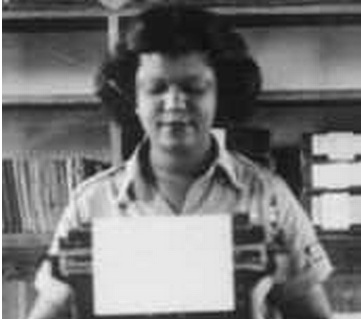
Constance was born in Kingston, Jamaica. Her father taught in a British Army school and when she was 16 when war broke out. She joined the Auxiliary Territorial Service (ATS) at the age of 19, serving in Jamaica as a medical secretary to the assistant director of medical services at the British Military Hospital.
Connie’s duties included typing up the medical reports which sometimes involved documenting the horrific injuries sustained from bombings and combat as soon as the men arrived back in Jamaica.
“The Military Police would come to get me wherever I was and I had to be down at that troop ship. And that’s really when the reality of war came home to me because you saw men leaving hale and hearty and you see them coming back on stretchers, you see them coming back in wheelchairs, some blind.”
The fight for equality that was to define Connie’s life started in the ATS. When directed to clean a British officer’s private quarters, she refused. After six months, she was promoted to Lance Corporal, and six months after that to Corporal. Each time, she was denied a pay increase. Each time Connie protested, but to no avail. She fought all her life for, but never received the back pay owed to her as a result of her promotions.
When the war ended, her commanding officer put in for her to receive the British Empire Medial (BEM), but her recognition was denied. Connie believed this was due to her earlier refusal to act as a personal charwoman to the British officer.
Despite this, when the ATS was merged into the Women’s Royal Army Corps in 1949, Connie signed up for further service. In 1952 she married Jamaican fast bowler Stanley Goodridge, who had been contracted to play cricket in Durham. Connie remained in Jamaica to complete her service before leaving for the UK in 1957. Stanley and Connie had two children, but they would later separate. Much later, Connie remarried and moved to London, taking the surname of her second husband, Michael Mark.
In the UK, Connie returned to her work as a medical secretary. She also became well known for her contributions to a range of charitable, community and educational projects. She joined the West Indian ex-Servicemen’s Association and pressed for them to add women to the title of the organisation, continuing her fight for the recognition of women’s contributions to the war effort.
Connie’s passion for the Caribbean made her a champion of its culture and a formidable force within the Black community. She was much in demand for her poetry and storytelling events, using oral history to inspire young people. She became a patron of Descendants, an organisation aimed at supporting youngsters of African and Caribbean descent.
In 1980, she founded the Friends of Mary Seacole, which was later renamed the Mary Seacole Memorial Association. Seacole had also been born in Kingston, Jamaica and was a pioneering nurse during the Crimean War, whose contributions left a lasting legacy in the medical profession.
In 1989, when preparations were being made to celebrate the contribution of servicemen and women on the fiftieth anniversary of the war’s outbreak, Connie began lobbying for the inclusion of those from the Caribbean. She applied for a grant from the Greater London Arts Council and put together an exhibition of photographs that she collected from service personnel and the archives of the Imperial War Museum for the anniversary celebration.
In 1992, Connie was finally awarded the British Empire Medal for her service during the war and in 2000 she received an MBE for her service to the community.
Connie Mark passed away in 2007. The following year, a plaque was unveiled at her former home in Hammersmith, Mary Seacole House.
In 2018, in celebration of the 100th anniversary of women’s right to vote, The Voice newspaper listed Connie Mark among eight Black women who had contributed to the development of Britain.