How do you respond when somebody makes a comment or assumption that feels uncomfortable, prejudiced or simply wrong?
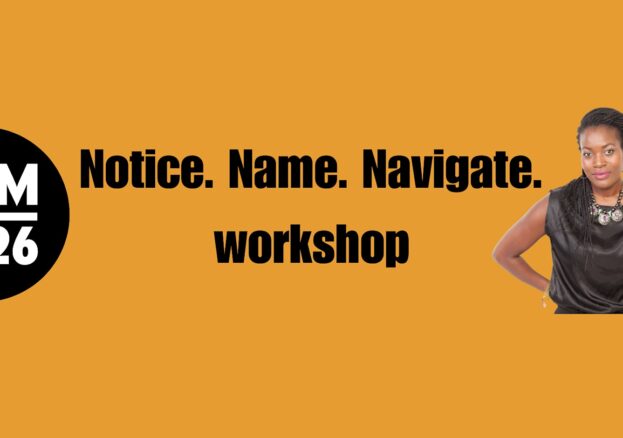
Notice. Name. Navigate. is an interactive Black History Month workshop at Newcastle’s West End Library exploring microaggressions, bias and the practical ways people can respond when they encounter them.
Organised by Newcastle Libraries, the workshop forms part of the city library service’s official Black History Month programme for 2026.
Led by Monique Pennie, the session develops some of the themes explored in her work Don’t Call Me Scary! and focuses on recognising microaggressions as they happen.
Microaggressions can take many forms.
They may appear as apparently casual questions, jokes, comments or assumptions about somebody’s background, appearance, abilities or identity.
Individually they can sometimes be dismissed as insignificant.
Repeated over time, however, these experiences can create environments in which people feel that they are constantly required to explain themselves, challenge assumptions or decide whether speaking out is worth the consequences.
The subject has particular relevance to conversations about the Black British experience.
Race discrimination in Britain has not always appeared through explicitly racist language or openly discriminatory policies.
It can also operate through everyday assumptions about who belongs, who is considered capable, whose experiences are believed and who is expected to adapt to the culture of an organisation or institution.
Recognising those moments is only part of the challenge.
Knowing what to say when they happen can be much harder.
That is where Notice. Name. Navigate. places much of its emphasis.
The workshop gives participants practical language and tools intended to help them recognise microaggressions and bias and respond with greater clarity and confidence.
Pennie draws upon almost three decades of experience in professional communications alongside her work delivering bias and allyship training to schools and organisations. No previous specialist knowledge is required to participate.
The workshop also provides an opportunity to think about allyship.
Addressing discrimination should not fall solely upon the person experiencing it.
Colleagues, friends, managers and bystanders can also play an important role by recognising what is happening and deciding when and how to intervene.
Black History Month provides an appropriate setting for that conversation.
Alongside celebrating Black history and achievement, the month can encourage wider discussion about how the experiences of Black people in Britain have changed — and where inequality, stereotypes and assumptions remain.
Notice. Name. Navigate. brings that conversation into the present day.
Rather than concentrating solely on historical events, it asks participants to think about the interactions taking place around them now and what each person can do when prejudice or bias appears in everyday life.
Taking place at West End Library in Newcastle upon Tyne, the free one-hour workshop offers a practical and contemporary contribution to Newcastle Libraries’ Black History Month 2026 programme.
More Newcastle Upon Tyne Listings MORE

Black Is The Color Of My Voice
Inspired by the life and music of Nina Simone, Apphia Campbell’s acclaimed Black Is The Color Of My…
Beyond Recognition: Structural Racism and the Health of the Black Community
Dr Gwenetta Curry delivers Newcastle University’s INSIGHTS Black History Month Lecture, examining how structural racism continues to affect…

Windows of Displacement
Migration, colonialism, identity and the meaning of home come together in Akeim Toussaint Buck’s Windows of Displacement at…
The Beat – Dance Crazed Too UK Tour
The Beat brings the energy of Britain’s ska and 2 Tone movement to Newcastle. Formed in Birmingham in…

The Dualers
The Dualers bring their blend of ska, reggae and Jamaican rhythm and blues to Newcastle. The South-East London…
Don’t Call Me Scary!
Don’t Call Me Scary! brings author and communications professional Monique Pennie to Newcastle City Library for a Black…
Notice. Name. Navigate.
How do you respond when somebody makes a comment or assumption that feels uncomfortable, prejudiced or simply wrong?…
Soul II Soul
Soul II Soul brings one of the most influential sounds in modern Black British music to Newcastle. Led…