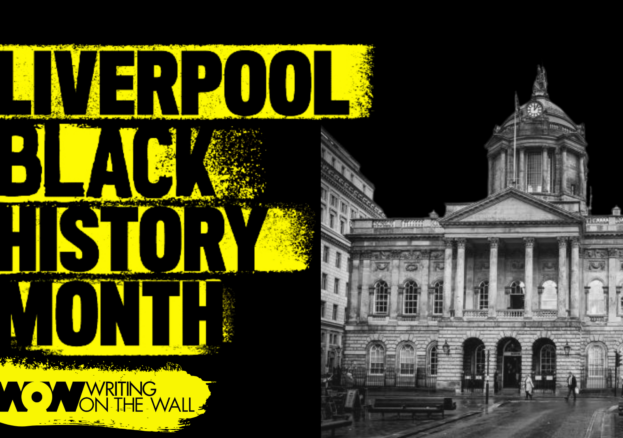
Explore the streets and historic sites that reveal Liverpool’s deep involvement in the transatlantic trafficking of enslaved Africans.
The Liverpool & Slavery Walking Tour was developed through Writing on the Wall’s Dorothy Kuya Archive Project in collaboration with National Museums Liverpool.
Research conducted during the project revealed the extent of Dorothy Kuya’s involvement in establishing the Atlantic Slave Trade Gallery, Slavery Remembrance Day and the International Slavery Museum.
Alongside Liverpool activist and historian Eric Scott Lynch (1932–2022), Dorothy led slavery walking tours with National Museums Liverpool during the mid-1990s.
Black activists such as Dorothy and Eric played a central role in changing how Liverpool remembers and commemorates its involvement in the transatlantic slave trade.
The tour visits streets and sites across Liverpool city centre with direct connections to this history. It will examine the depth of the city’s involvement in the trafficking of enslaved Africans and its continuing trade in goods produced through slavery after Britain abolished its slave trade.
Participants will also explore the enduring legacies of Atlantic slavery and how anti-Black racism and ideas of white supremacy were used to justify oppression during the 18th and 19th centuries.
The tour begins at The Pump House at Royal Albert Dock, continues through the L1 and L2 areas of the city and finishes at Liverpool Town Hall.
About the tour leader
The tour will be led by Nasra Elliott, an Engagement Producer at National Museums Liverpool’s International Slavery Museum and a Liverpool-based community historian.
Her work focuses on community engagement, public history and ethical collaboration, with a particular interest in Liverpool’s Black histories and the city’s connections to transatlantic slavery, empire and their continuing legacies.
At the International Slavery Museum, Nasra develops research-informed programmes that bring together archival material, community knowledge and lived experience to create accessible public history.
Her work is grounded in decolonial approaches to heritage, participatory governance and the role museums can play in addressing historical injustice. She is also an independent researcher.
Anyone who would like to attend but cannot afford a full-price ticket is encouraged to contact Writing on the Wall. All enquiries will be treated confidentially.
Event enquiries and ticket support:
info@writingonthewall.org.uk
More Liverpool Listings MORE
DEATH OF A SALESMAN
Arthur Miller’s Death of a Salesman is reimagined for Liverpool by acclaimed British-Ghanaian theatre-maker Tristan Fynn-Aiduenu in a…
BHM26: Professor Stephen Small – Black Liverpool
Professor Stephen Small returns to his home city to launch Liverpool’s Black History Month programme with a special…

Manchester Collective X Sidiki Dembélé: Constellations
Manchester Collective joins forces with Ivorian percussionist Sidiki Dembélé for Constellations, a vivid musical journey bringing West African…
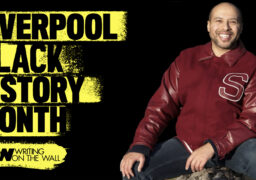
BHM26: Dean Atta – Big Man
Join award-winning author, poet and filmmaker Dean Atta for a special event celebrating the publication of his adult…
Blackfest 2026 Presents: Visual Arts Workshop With Ayobami
Liverpool’s BlackFest 2026 invites audiences to explore colour, abstraction and expressive mark-making in a hands-on visual arts workshop…
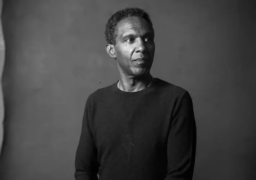
Black History Month Lecture with Lemn Sissay
Black History Month Lecture with Lemn Sissay brings one of Britain’s most distinctive poets, authors and broadcasters to…
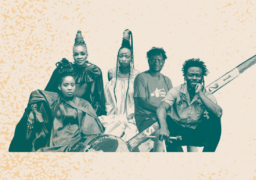
African Soul Rebels: Les Amazones D’Afrique, Gasper Nali and N’Famady Kouyaté
African Soul Rebels brings three distinctive African musical voices to Liverpool Philharmonic Hall for an evening of rhythm,…

Ibibio Sound Machine + Ziyad Al-samman
British-Nigerian frontwoman Eno Williams brings the electrifying Ibibio Sound Machine to Birkenhead for an October performance at Future…